AI agent use cases for travel and expense, compared with what you already run
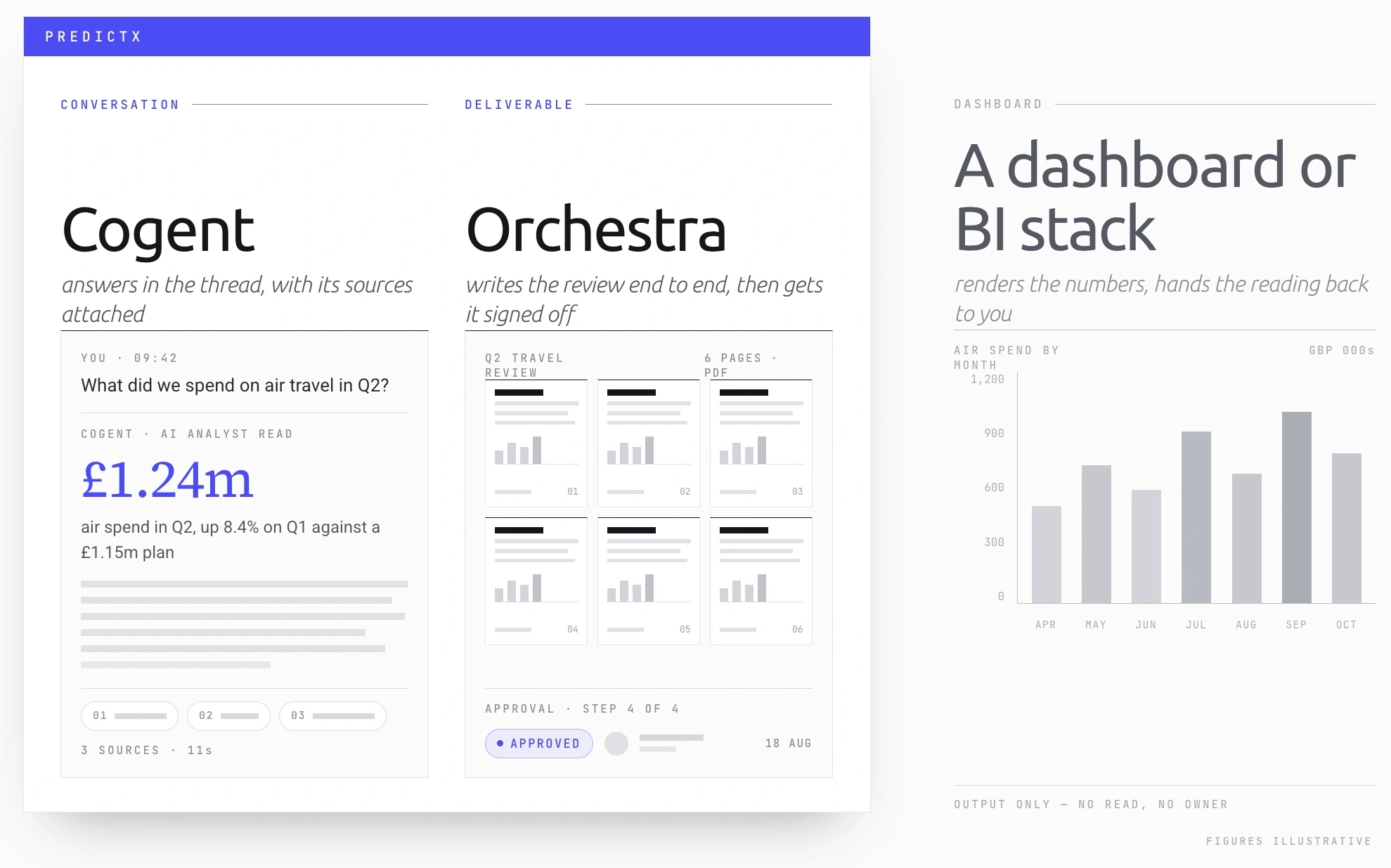
Two products and the dashboard most programmes already run, side by side across seventeen rows, including three where the dashboard wins.
Every answer cited to source · No new system for travellers · Runs on your existing feeds · ISO 27001:2017 · PCI-DSS · Cyber Essentials · GDPR
You do not have to replace anything to find out where yours stops.
The short answer
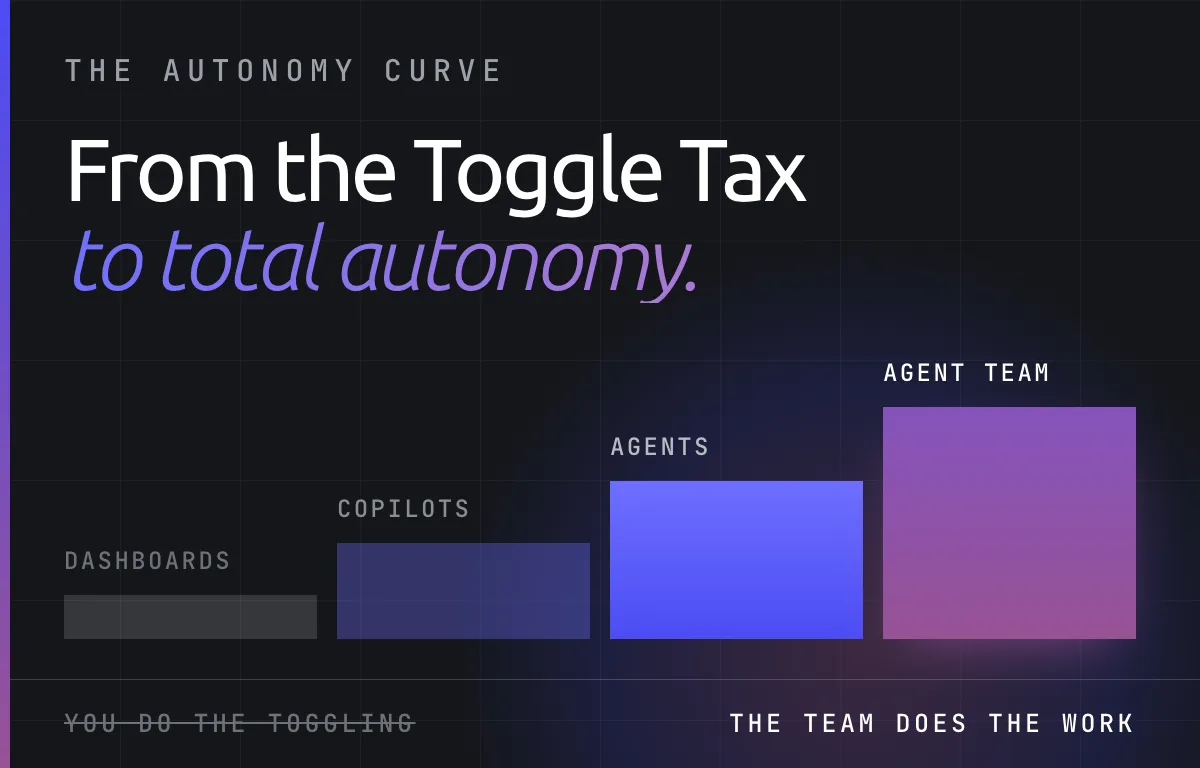
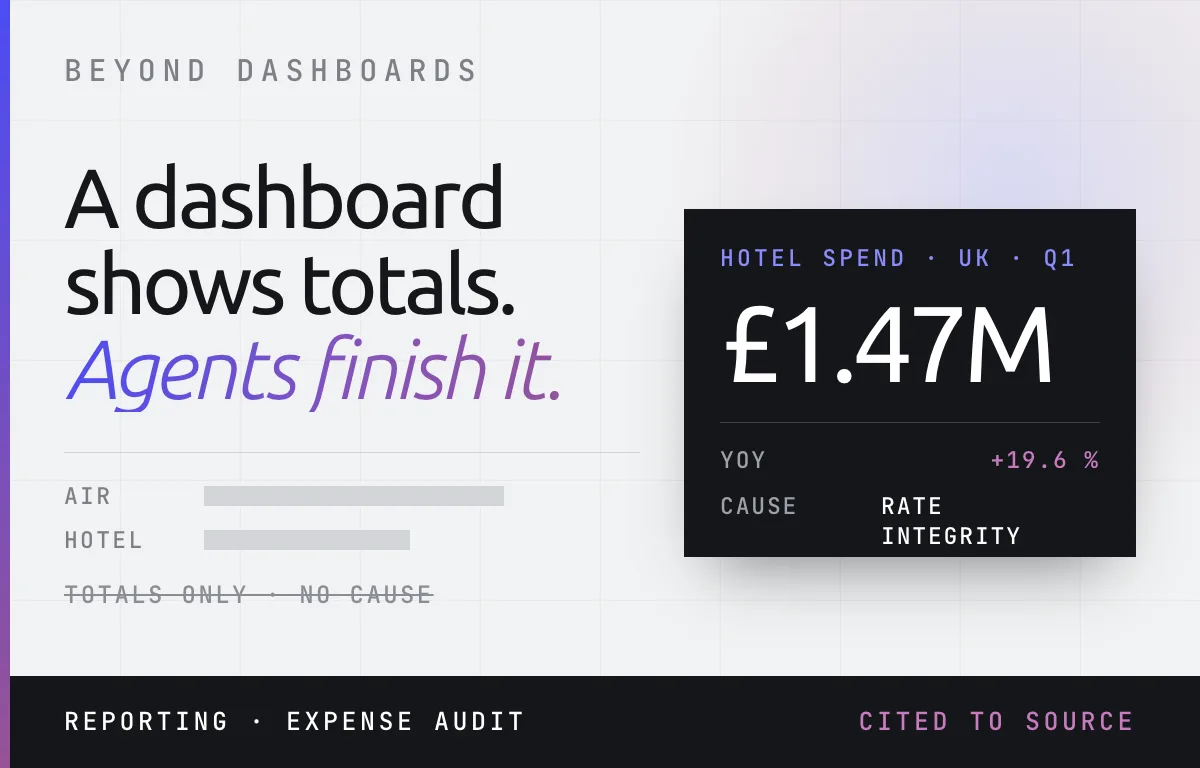
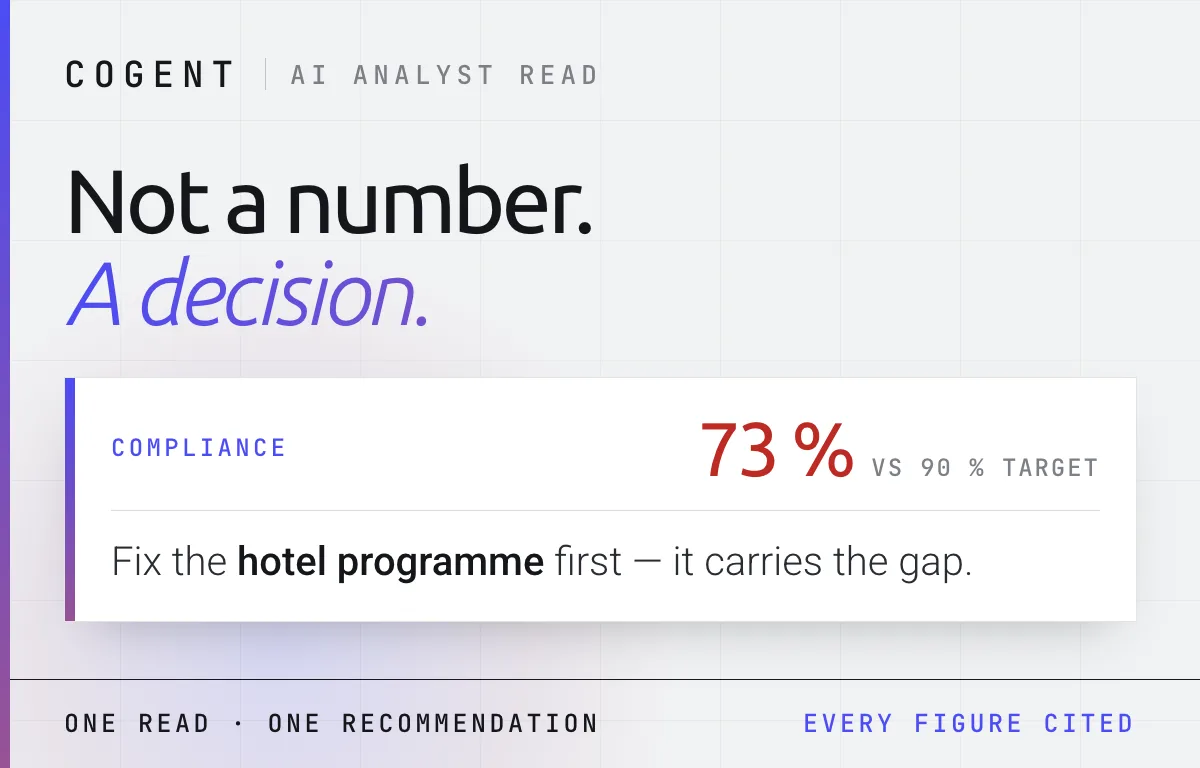
AI agent use cases in travel and expense come down to two. One answers a question against your live data in seconds: compliance by traveller, contract utilisation, a policy change modelled across real bookings, duplicate claims caught before reimbursement. The other runs a whole project through to a finished deliverable, under your approval. Instead of reading a chart and writing the conclusion underneath it, you get the conclusion with every figure cited back to source.
The comparison
Two AI agent examples, and the way most programmes work today
IBM defines an AI agent as a system that autonomously performs tasks by designing workflows with the tools available to it (IBM, 2024). Two of the three columns below are agents. The third is the dashboard, BI stack, self-service analytics or spreadsheet most programmes already run.
Your existing reporting almost certainly holds the data. These rows are about what happens between having it and getting the answer. Every column is a complete specification on its own: read down one, or across a row.
PredictX
Everything else

Cogent
The one you ask. Put a question to your live travel and expense data and get an answer back in seconds, cited to the record it came from.
Live · Runs on your existing feeds

Orchestra
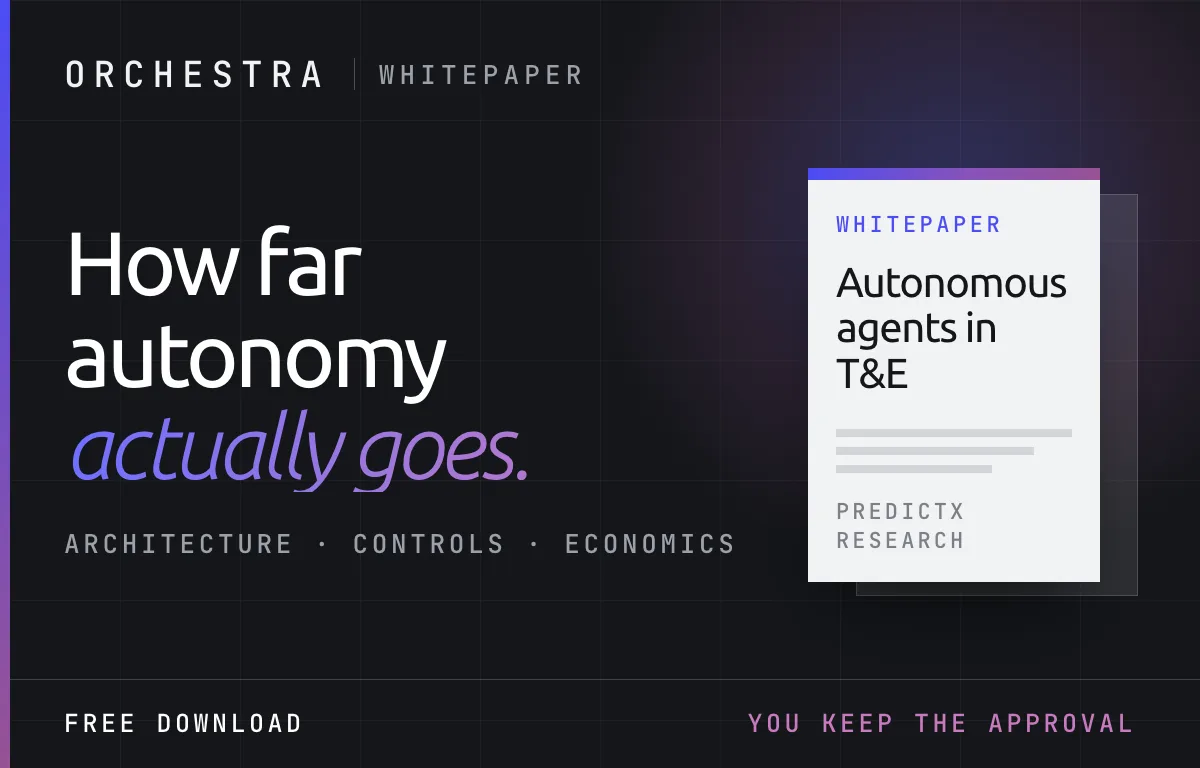
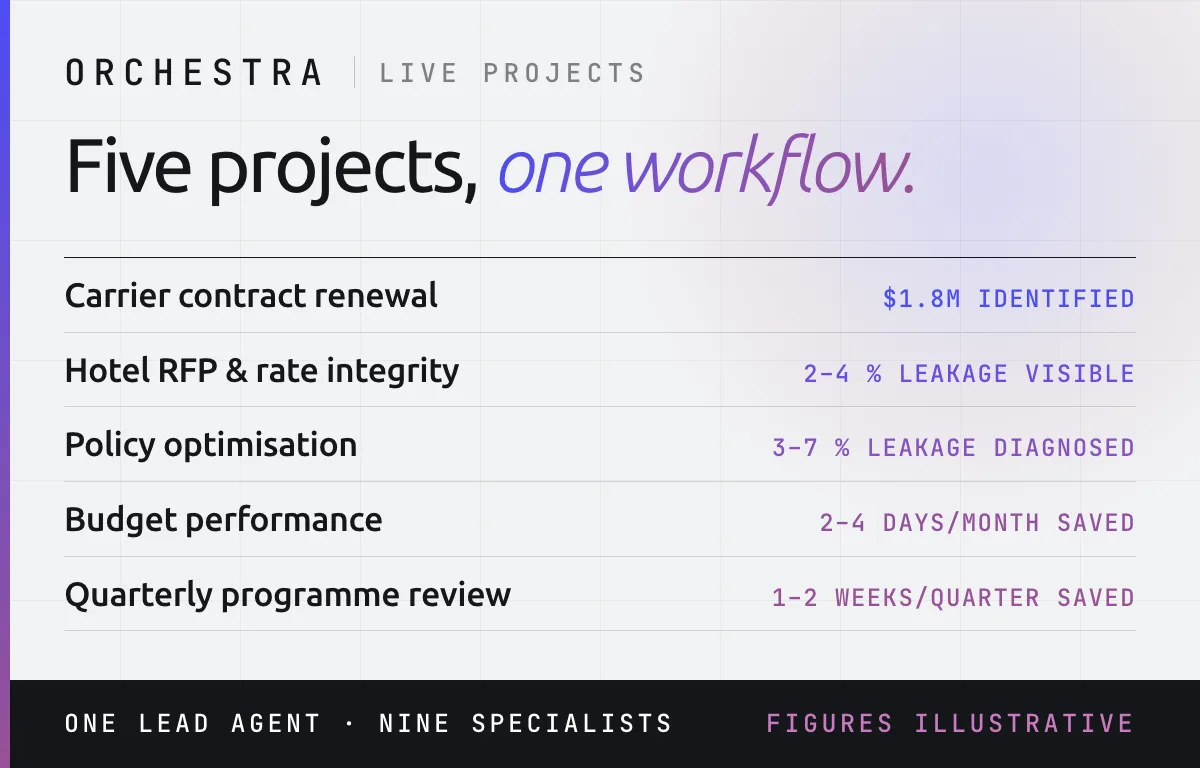
The one you delegate to. An AI agent team scopes a project, runs it under your approval, and hands back a finished deliverable.
Live · Adds to an existing PredictX programme

A dashboard or BI stack
The dashboard, BI stack, self-service analytics or spreadsheet most programmes already run, and the general-purpose assistant sitting beside it. Described as the work it leaves you doing, not as a claim about any vendor.
Whatever you already have in place
Not a product, and nothing to buy here
| Attribute | Cogent | Orchestra | A dashboard or BI stack |
|---|---|---|---|
01 Summary: a question, a project, a chart Each of the three finishes a different unit of work. That unit is the fastest way to tell them apart, and it is the thing to match against what your programme actually needs. | |||
| Unit of work | A question | A project | A chart |
| The short version |
|
|
|
| What it covers |
|
|
|
02 How the work starts Who begins the work, and who does the assembling before an answer is possible. | |||
| Who starts it | You ask, whenever the question arrives | You commission a project, then approve the plan before anything runs | You open the dashboard you have, or raise a ticket for whatever sits outside it |
| Who assembles the data | The agent, reading your live feeds directly | The agent team, across nine specialists | Typically done up front, when the BI stack was built. Anything outside that model comes back to you or to an analyst |
| How many systems you touch | One. Nothing else required | One. Built on Cogent and named for it: Orchestra, powered by Cogent |
|
03 What comes back, and how fast The artefact you are left holding at the end, and how long it takes to arrive. | |||
| What you get | An answer, cited to source, in a thread you can audit | A stakeholder-ready deliverable: report, PDF or editable deck | A dashboard tile or a spreadsheet export. You supply the interpretation |
| Report or dashboard | A cited answer in a thread, on demand | A report. Editable, exportable, cited to source |
|
| Time to an answer | Seconds | Hours to days, paused at five approval gates |
|
04 Approval and control What runs without a human saying yes, and what each one is allowed to touch. | |||
| Human approval gates | None before the answer, though it asks you to clarify when a brief is ambiguous. You interrogate it after: every figure opens to its reasoning, and any thread re-runs on fresh data | Five, in order: define, plan, execute, validate, deliver | Whatever your own review process already is |
| What it does without your approval | Reads and analyses your data, and returns a cited answer for you to act on | Reads, analyses and drafts. Nothing runs until you approve the plan | Whatever your dashboard and BI stack already do. You act on what you read, and you decide what happens next |
05 How you know the numbers are right Where a figure comes from, and who checks it before anyone acts on it. | |||
| Where a figure comes from | Every figure traced to the source query behind it | A provenance trail on every claim in the deliverable | You check the numbers by hand before you present them |
| Who checks the work | An independent validation agent audits outputs before release |
| You, or a second analyst, depending on how much the answer matters |
06 Getting it running, and what it costs you Where the dashboard you already run has the advantage. | |||
| Availability | Live | Live | Already running in most programmes |
| Time before anyone can use it | Deploys on your existing feeds. No new system for travellers | Adds to an existing PredictX programme with no new integration work | None. It is already there, your team already knows it, and that is a real advantage. The dashboard wins this row |
| What your team has to learn | How to ask a question in plain language | How to scope a project and approve a plan | Typically nothing new. The cost is what it takes to get an answer it was not built for |
| What you are buying | A subscription across the programme, sold by conversation | A step up from Cogent, sold by conversation | Varies widely: per seat, per query, per project, or already inside a platform you pay for |










How they relate
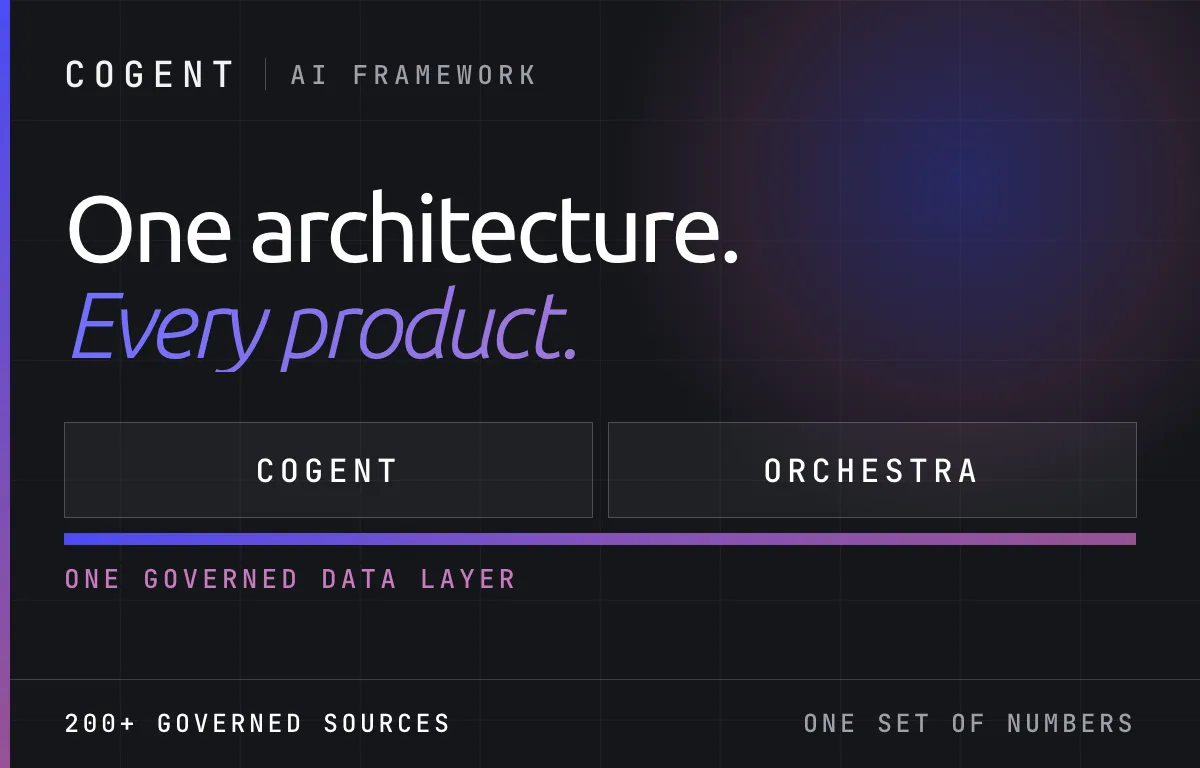
The two are not separate systems. Orchestra is powered by Cogent, so the same consolidated travel and expense data sits under both: the agentic AI framework both run on.
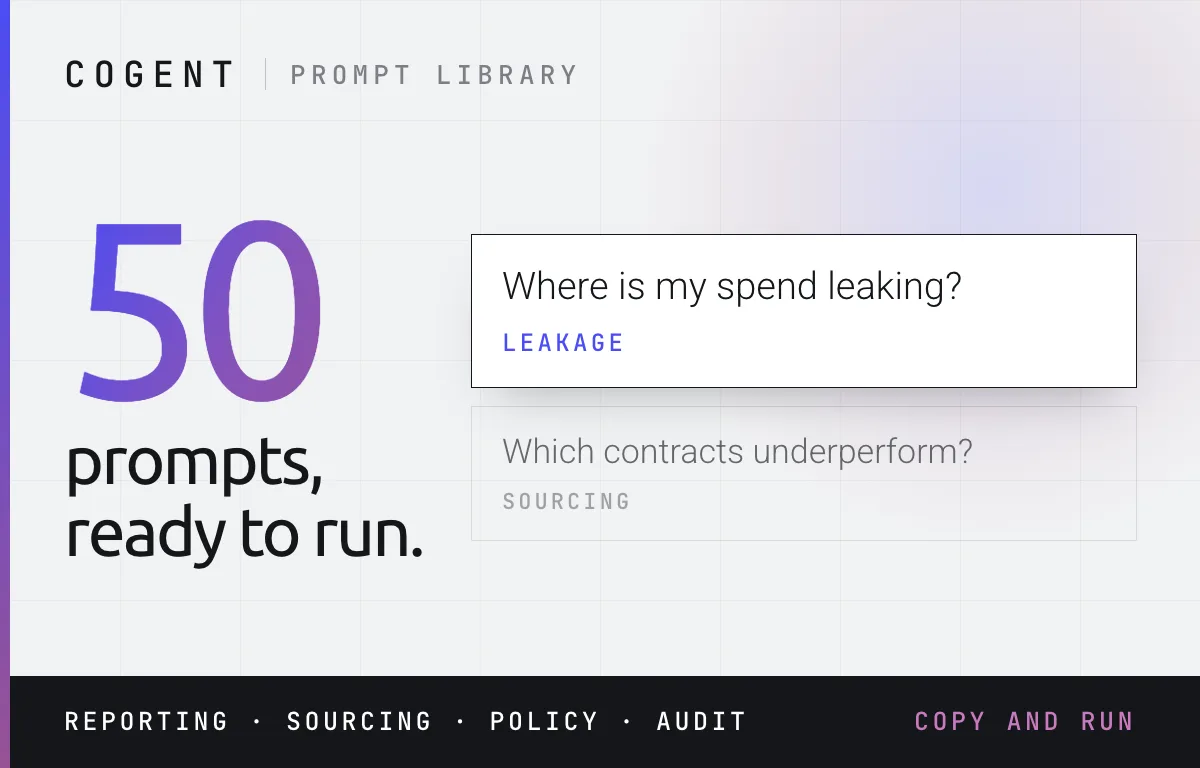
You can test the shape of the work before you choose either of them: 50 free AI prompts to run first, no gate and no form. The download appears straight away.
On the control rows
Trust in an agent tracks what it is allowed to touch. The PwC AI Agent Survey of 308 US executives, fielded in April 2025, put trust highest for data analysis at 38% and lowest for financial transactions at 20%. Both products on this page sit in the first group. They read your data, analyse it and return a cited answer, and Orchestra pauses at five approval gates before anything is delivered.
Before procurement asks
Both products inherit the same controls as the framework underneath them: ISO 27001:2017, PCI-DSS, Cyber Essentials and GDPR. They deploy on the feeds you already send, so nothing new is asked of travellers and no data leaves the estate it sits in today.
Where to start
Which one is right for you
Four situations, written as readers describe them rather than as job titles.

“A new question joins the data analyst queue and I wait weeks.”
Start with Cogent.
It closes the gap between the question and the answer, which is the gap that costs most when the question changes every week.

“I have a list of work I never had the team to do.”
Start with Orchestra.
It is built for the analyses a programme rations because the outside version is a consulting engagement that lands weeks after the decision. PredictX puts a comparable external engagement at $50K to $200K, from its own programme experience: that is a market cost for outside work, not a PredictX price. Orchestra is for when the work needs finishing, not answering.

“What we already have mostly works.”
Then keep it, and be specific about where it stops.
The questions worth an agent are the ones where you join the feeds by hand, work out what the chart means, or raise a ticket and wait. If none of those is happening on your programme, you do not need this page.

“Both sound like things I need.”
Then start at the question and add upward.
They stack: Orchestra is powered by Cogent, so moving up the range adds depth rather than replacing what you already run. Nobody has to buy both on day one, and the order is not arbitrary.
In practice
How AI agents start in a finance team: pick one recurring question that already has a deadline, run it on your own consolidated data, and check the answer against the way you produce it today. That is what makes AI agents for finance verifiable rather than impressive. The sequence that works is one recurring question on Cogent first, then one scheduled project on Orchestra once the answers are trusted.
Pick the question where the spend is moving. The 2026 GBTA Business Travel Index, published on 3 August 2026, forecasts global business travel spending at $1.71 trillion this year, a rise of 7.2%, while trips rise 1.3% to 1.84 billion. Cost per trip is what is changing, and that is a different question every month rather than the same view every month.
Questions your team will ask
What are the different types of AI agent a business actually uses?
Is ChatGPT an AI agent?
What is the difference between an AI agent and an AI assistant?
How is an AI agent different from a dashboard?
What can an AI agent do with travel and expense data?
Which AI agent do I need for a travel and expense programme?
Do I need both, or will one do?
Can I use Cogent without Orchestra?
How should I compare pricing across AI agent products?
Why not just use the reporting tools we already have?
How do you run an AI agent pilot that produces reliable signal rather than demo results?
What security questions matter most for agents that can act in your systems?
Will an AI agent replace our data analysts and BI team?
The question gets answered before the meeting, not after it.
Run one of your own questions through both
Bring the question your team could not get to this quarter. We will run it on data shaped like yours, show you which of the two answers it, and say so if the answer is the tooling you already have.
No new systems for travellers · Your existing feeds · Nothing runs until you approve the plan
4 of the 6 largest global T&E programmes run on PredictX
Most programmes start with one and add the other at its ceiling. Cogent answers the question, and Orchestra finishes the job.
Keep reading