What is Cogent by PredictX?
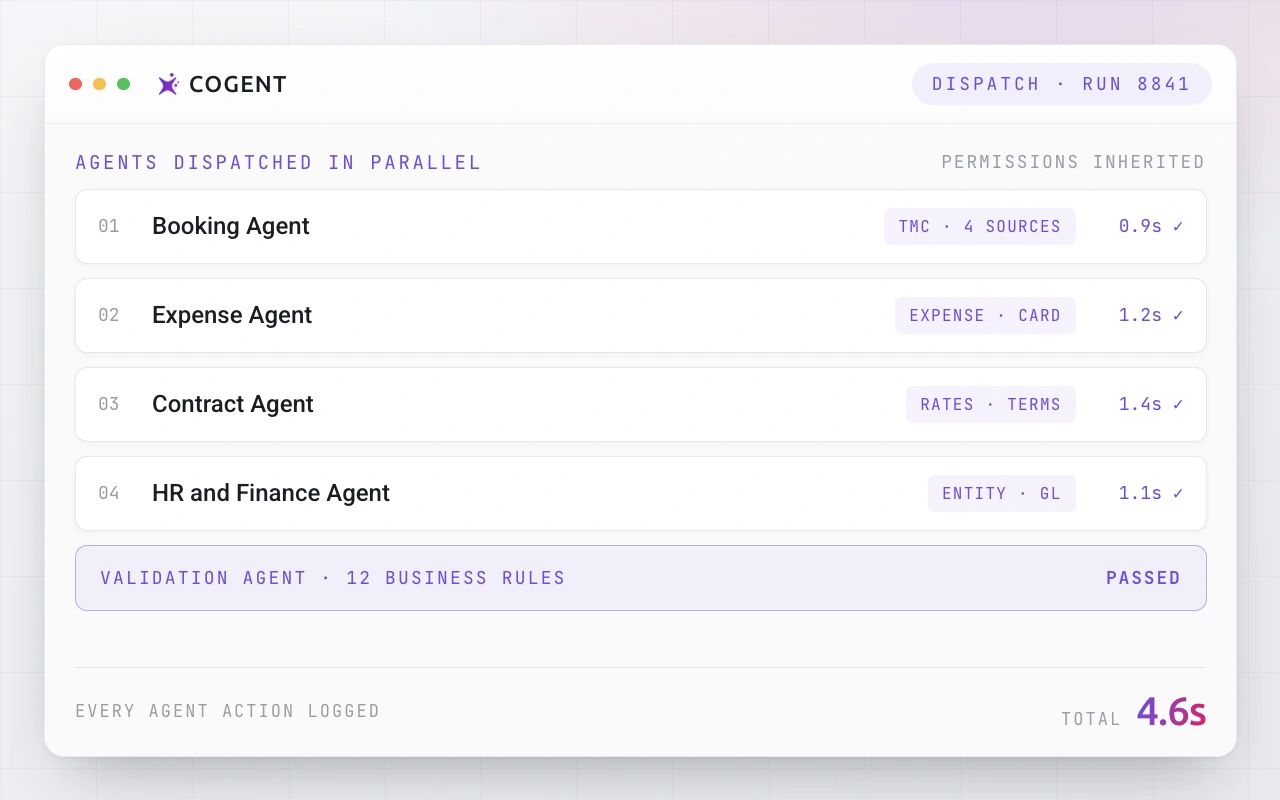
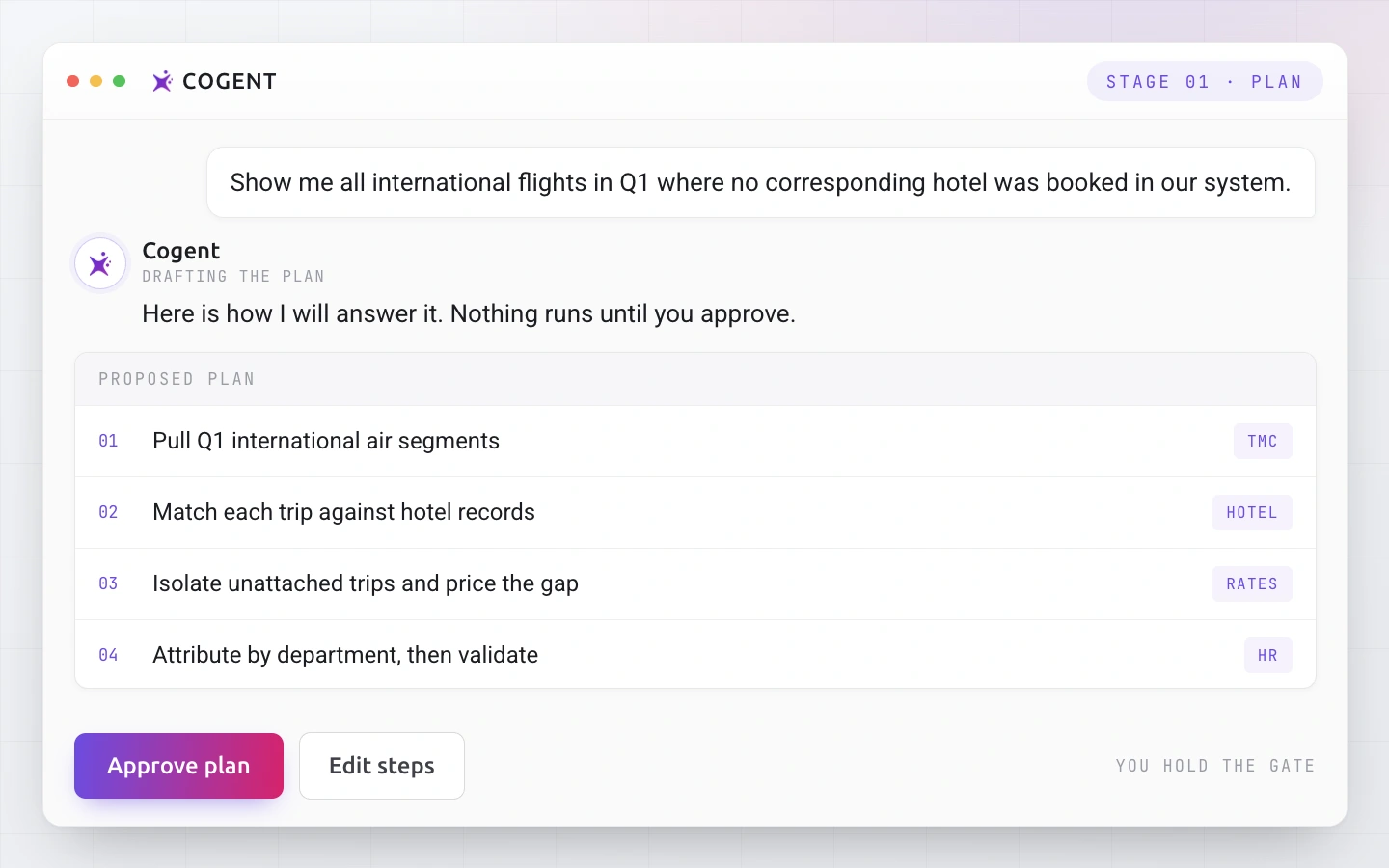
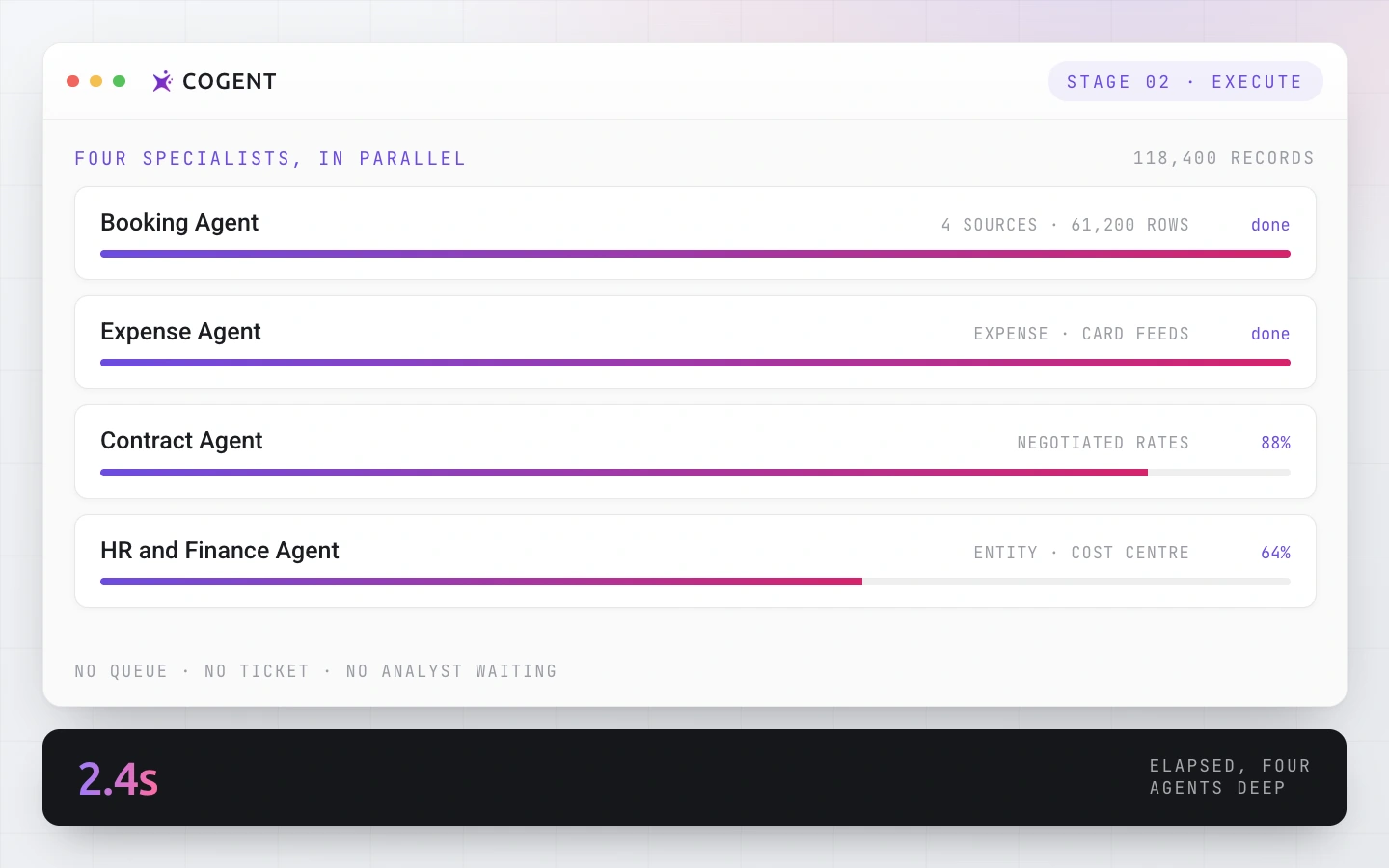
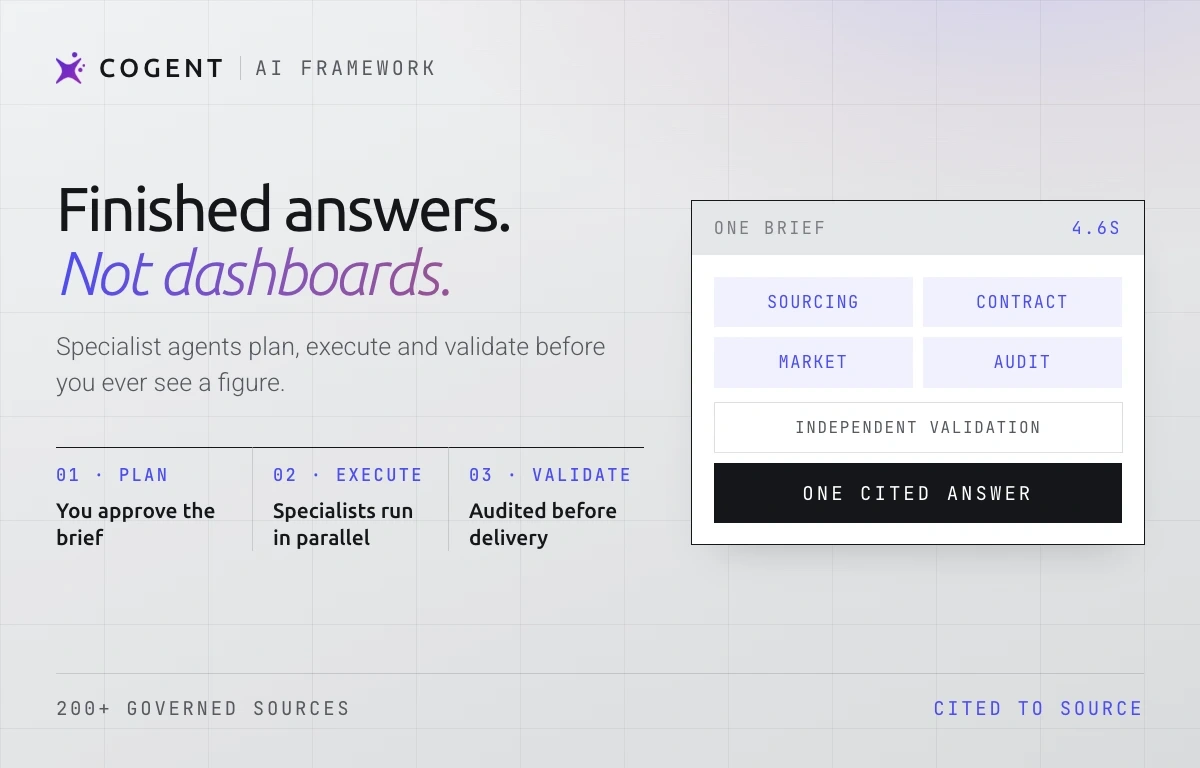
Cogent is PredictX's agentic AI workspace for travel and expense: AI T&E reporting and analysis you brief in plain language. Specialist agents plan each request, execute it across consolidated booking, card, expense, HR and finance data, and return validated, cited answers in seconds. It runs on the Cogent AI Framework, deploys on your existing feeds, and every answer is auditable to source.
What can I ask Cogent about my T&E data?
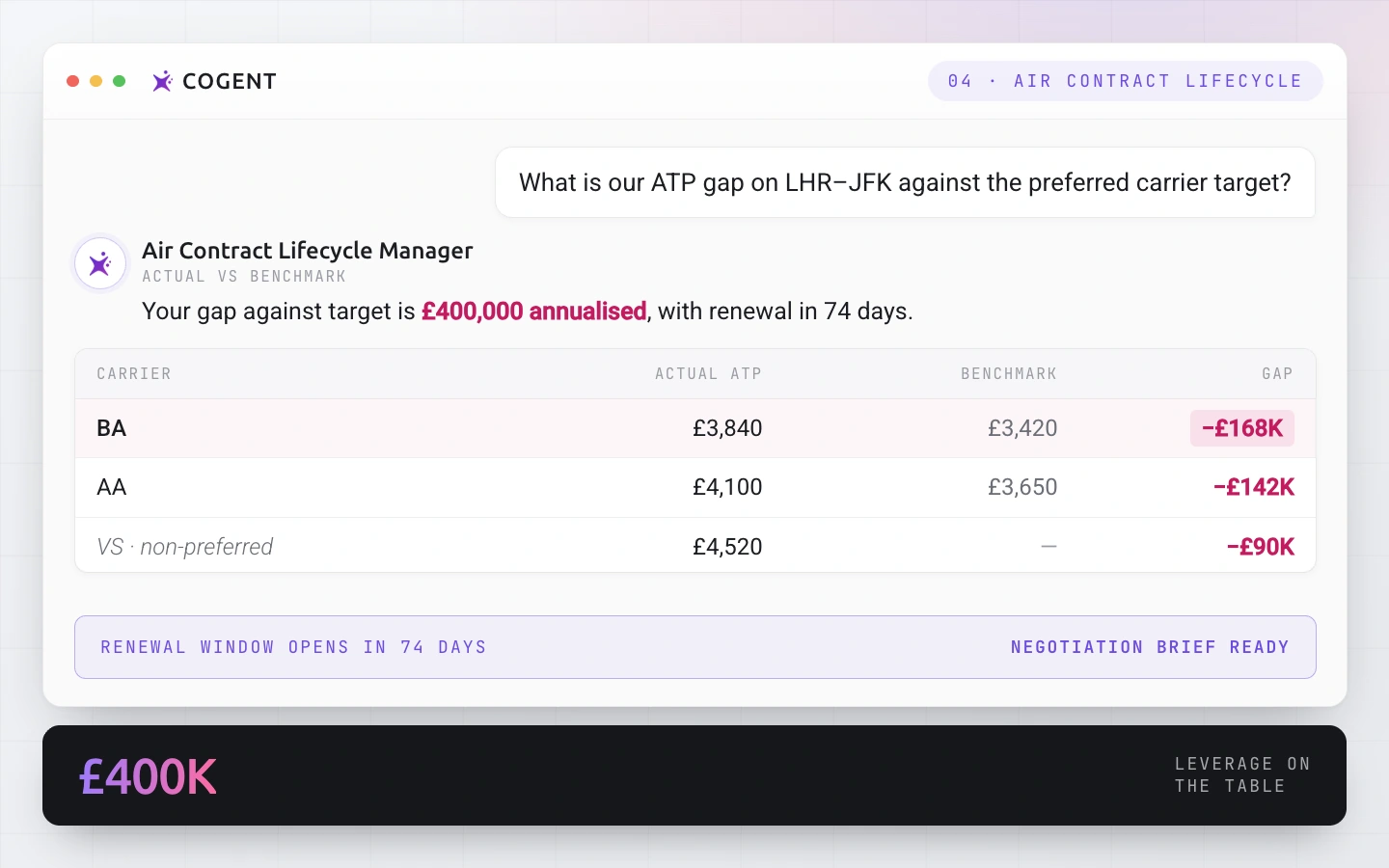
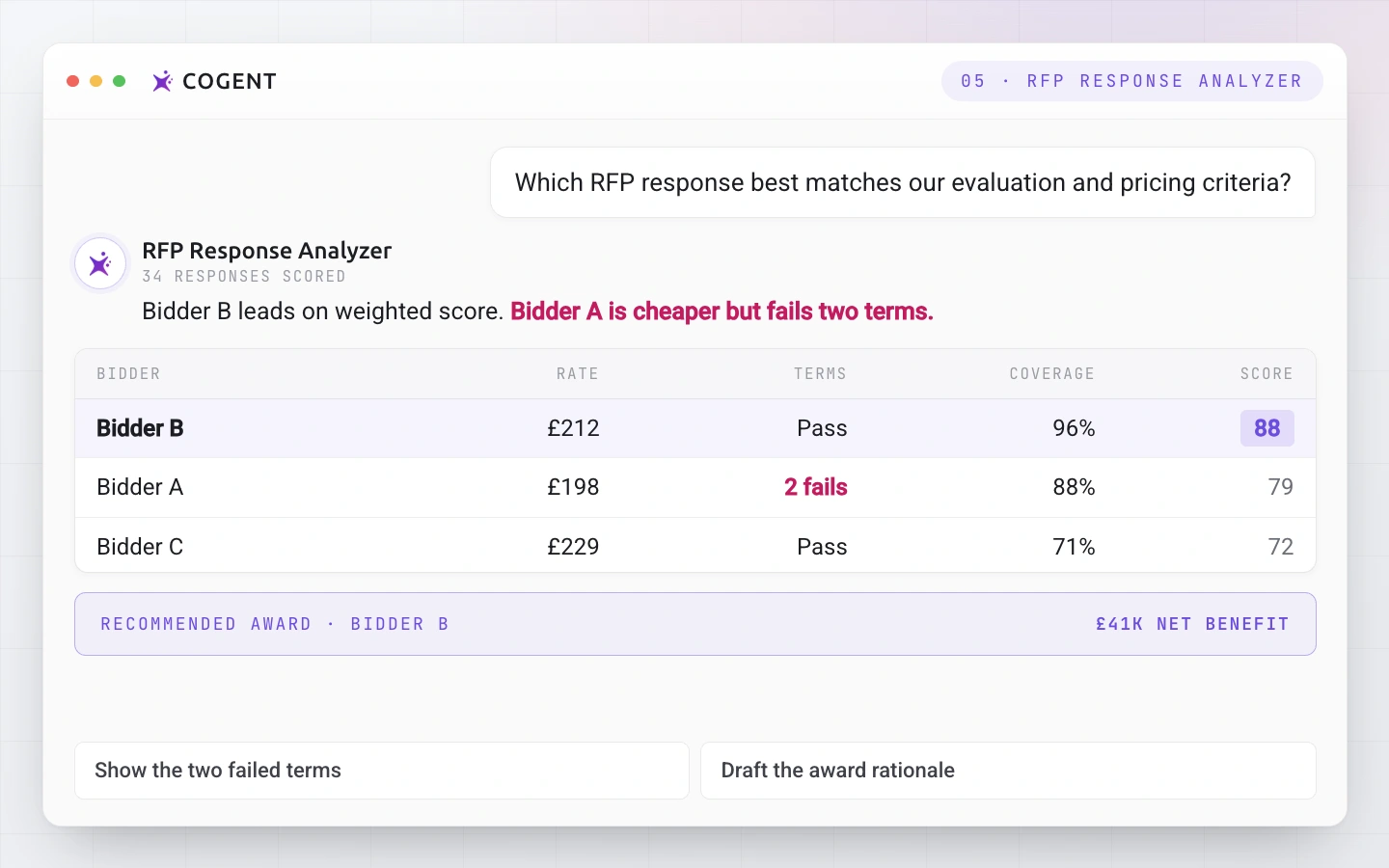
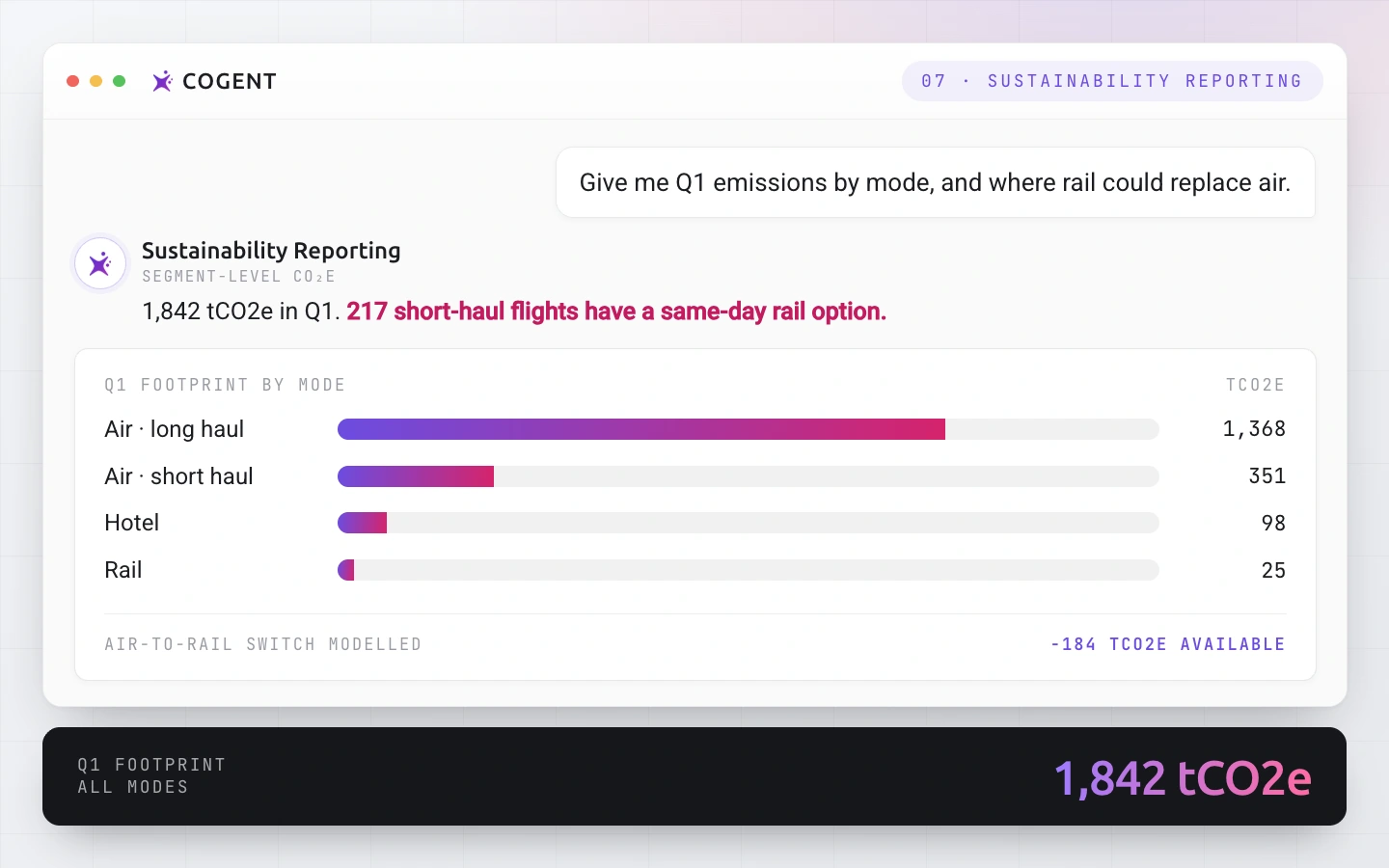
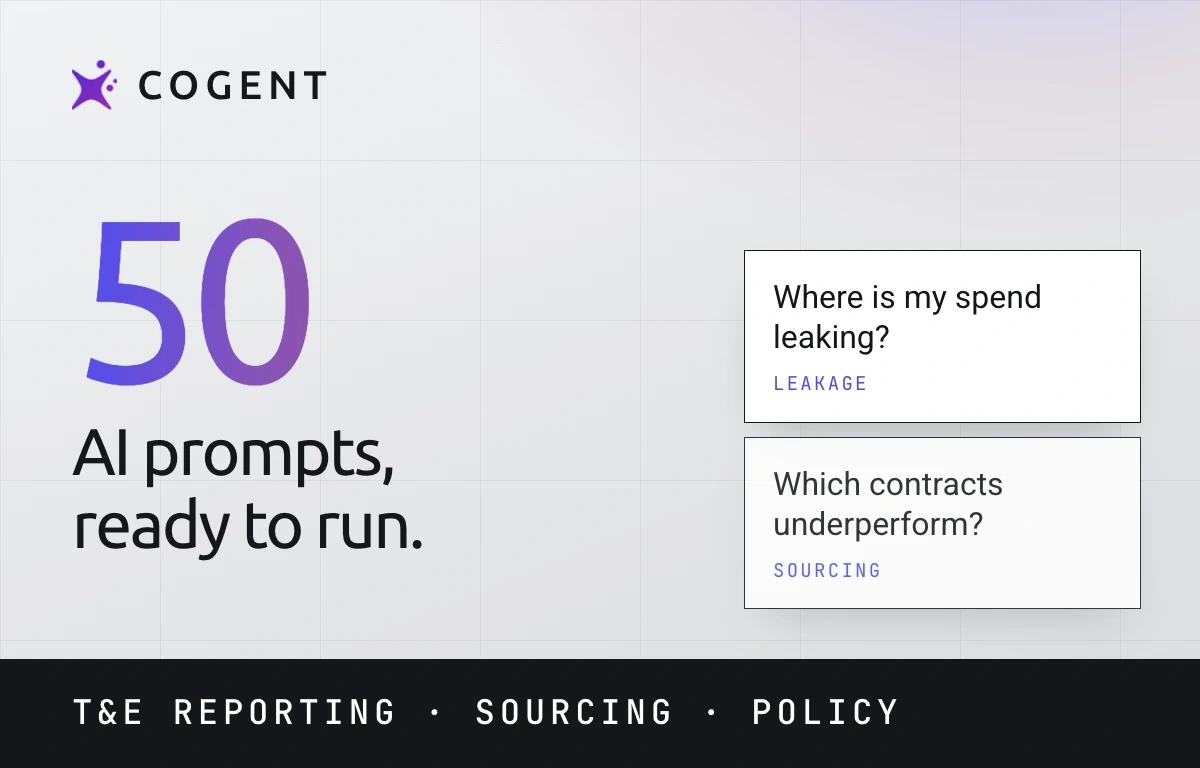
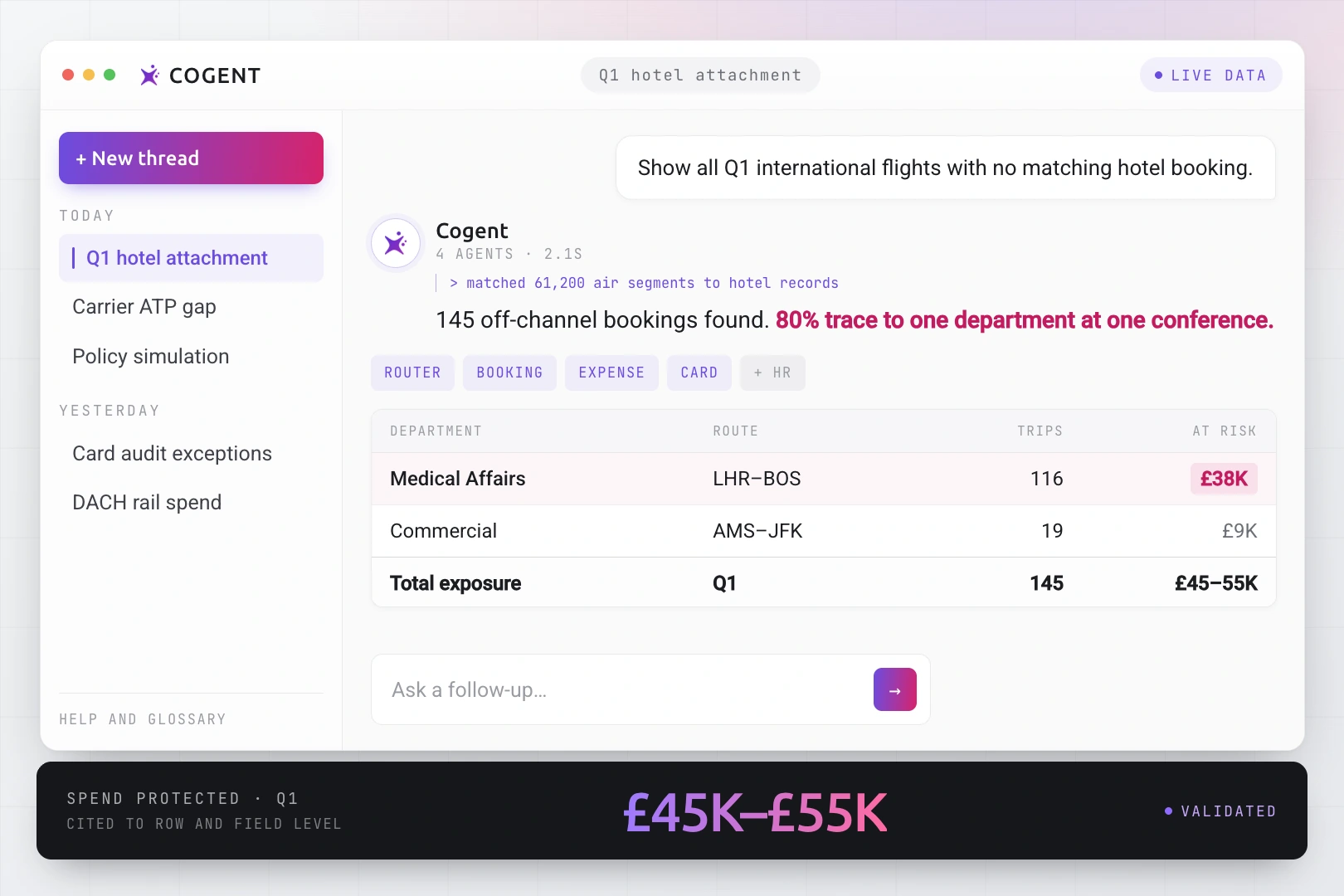
Anything your T&E data can answer: compliance by traveller, spend versus budget by entity, policy change modelling, contract utilisation, unused ticket credits, off-channel bookings, emissions by route. Briefs run in plain language with no query syntax, and any thread can be re-run on fresh, consolidated data whenever you ask. The What to Ask section above lists three briefs you can copy in verbatim.
Is Cogent a chatbot, or an AI agent workspace?
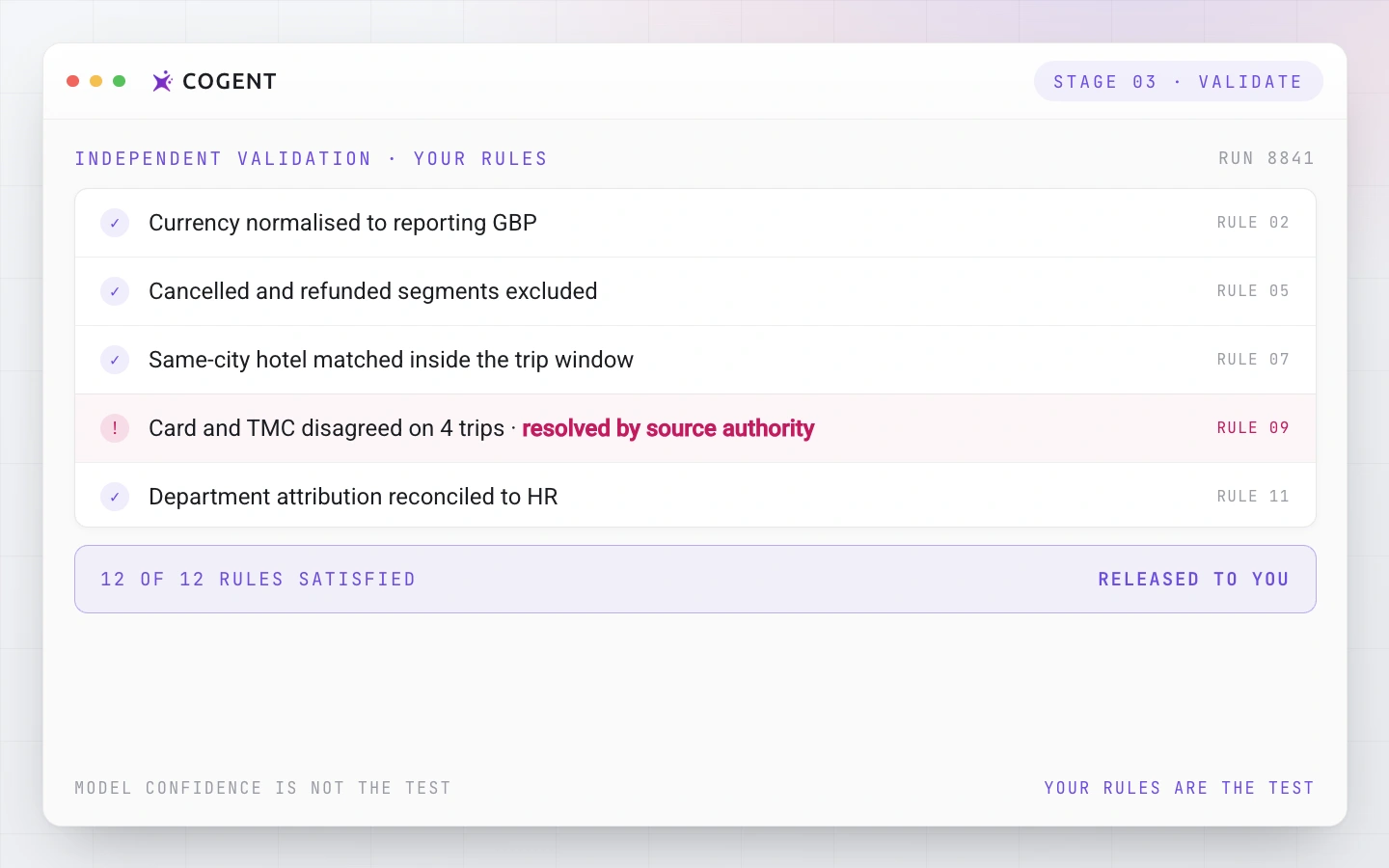
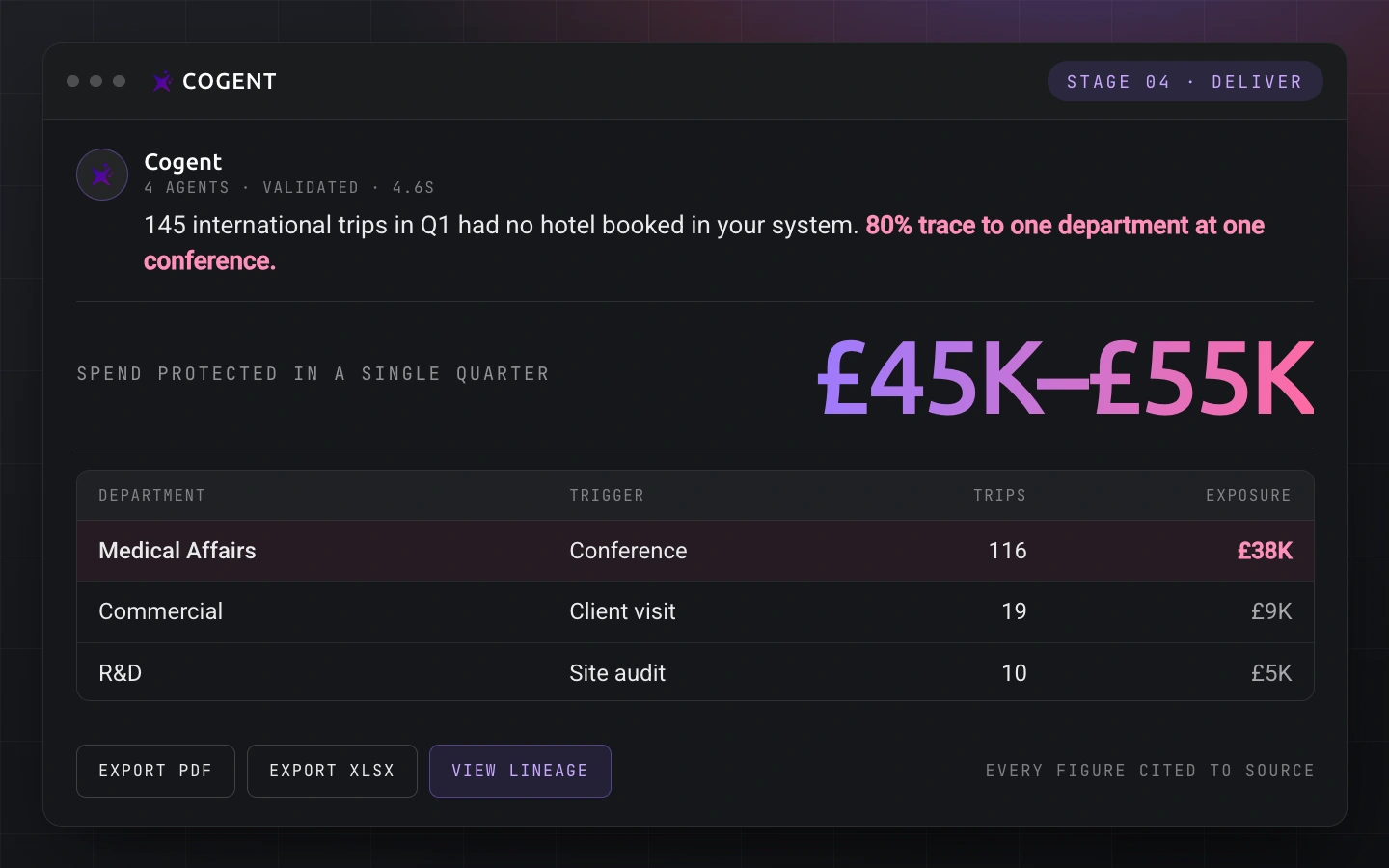
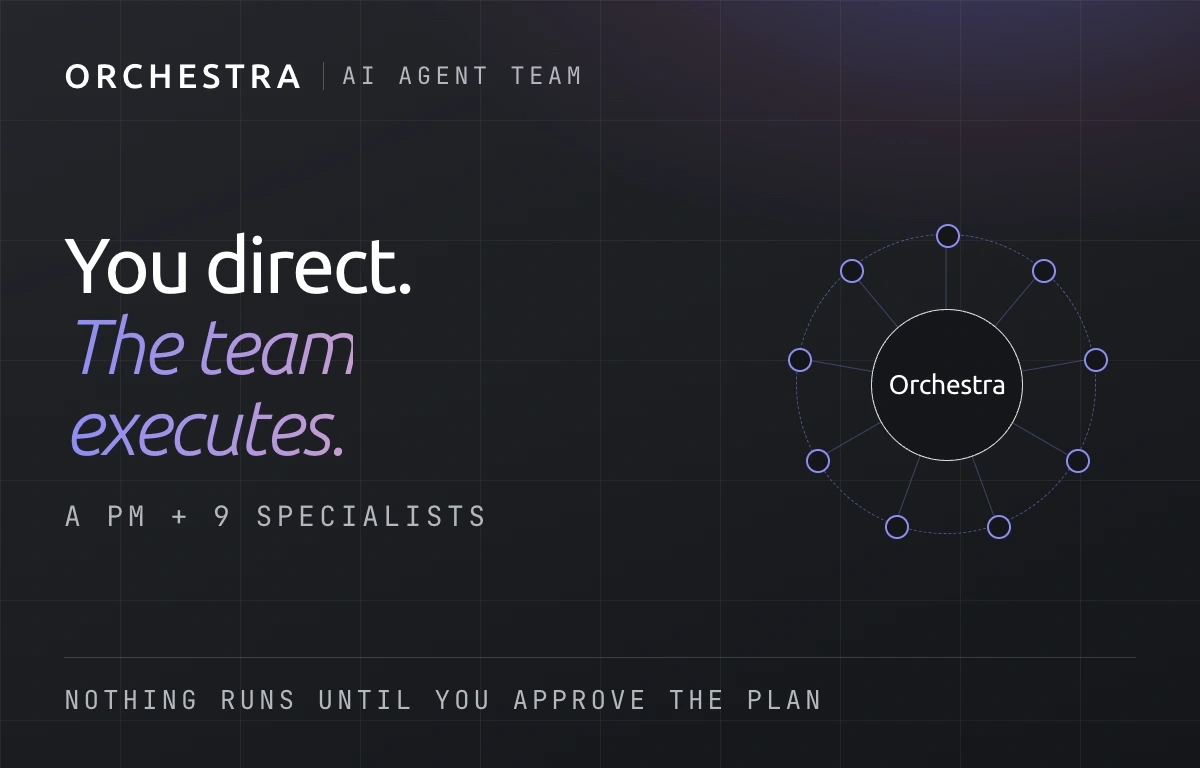
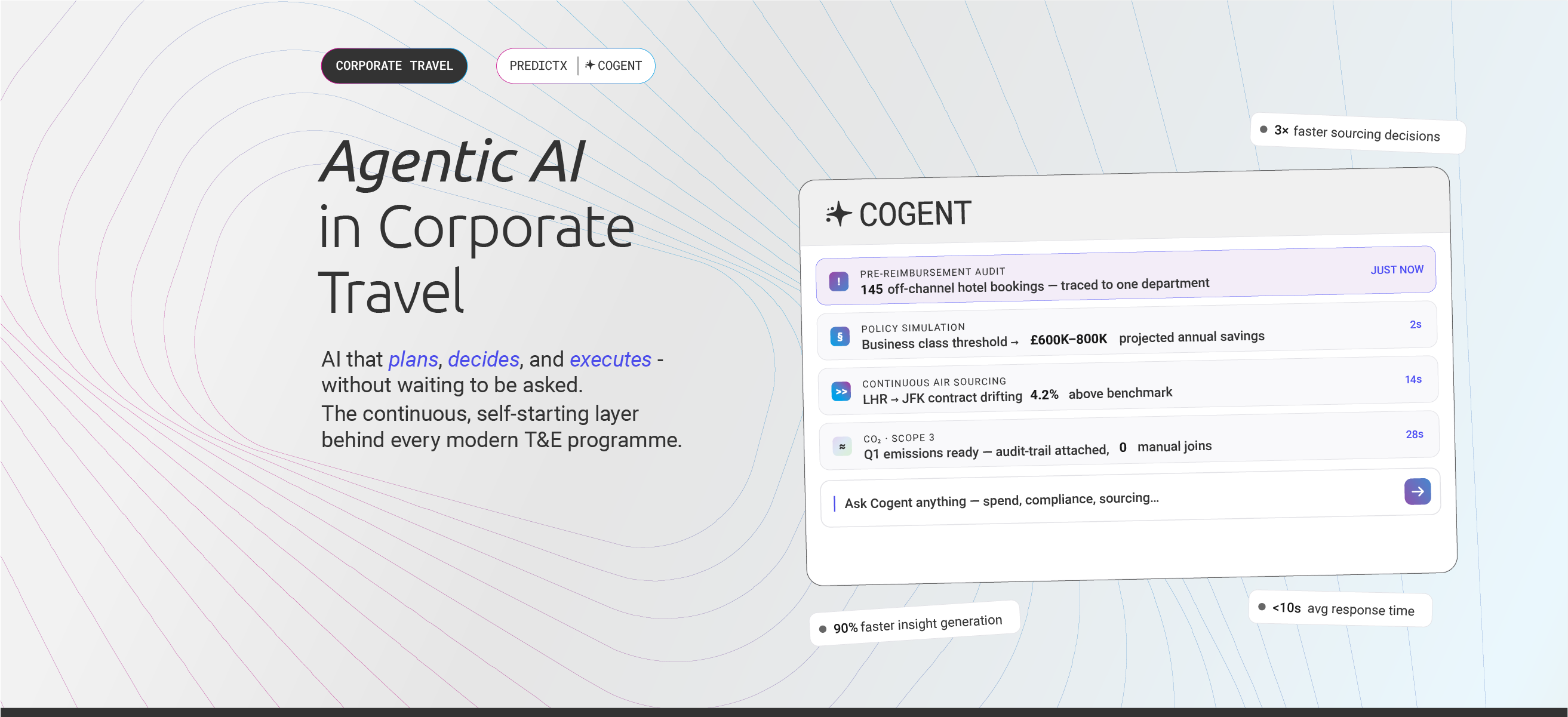
No. A chatbot replies to messages from one system's data. Cogent plans work, delegates it to specialist agents, executes it across your whole T&E estate, validates the result against your business rules, and delivers a cited answer. It also returns key observations and next steps you didn't ask for. Chat is one way to brief it; the work happens in the team of agents behind it.
Agentic analytics vs a BI dashboard: what does Cogent do differently?
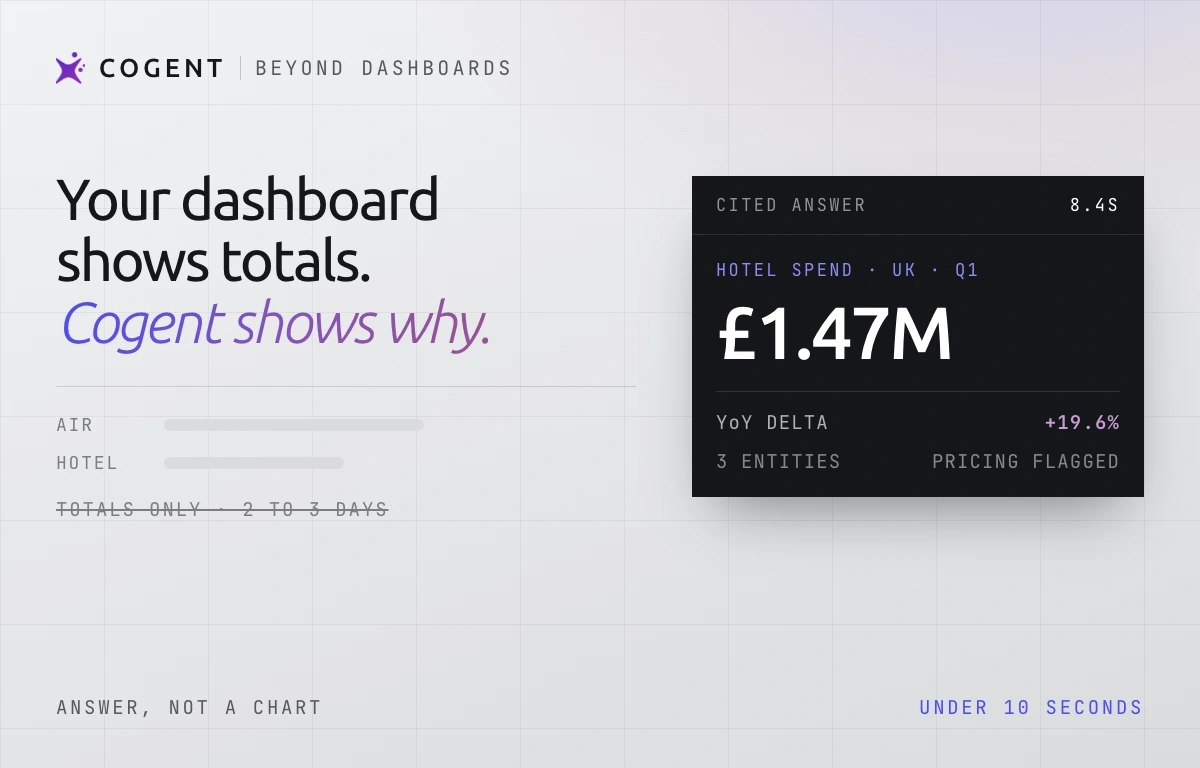
A dashboard shows pre-modelled KPIs and waits for a human to interpret them; every new question becomes a rebuild request. Cogent takes the question itself, plans the analysis, executes it across live data and returns the finished, cited answer, plus proactive findings you did not request. That planning-and-execution loop is what makes it agentic analytics rather than a reporting tool. Dashboards remain useful for monitoring known metrics; Cogent exists for the questions the dashboard was never built to answer.
How does Cogent keep answers accurate?
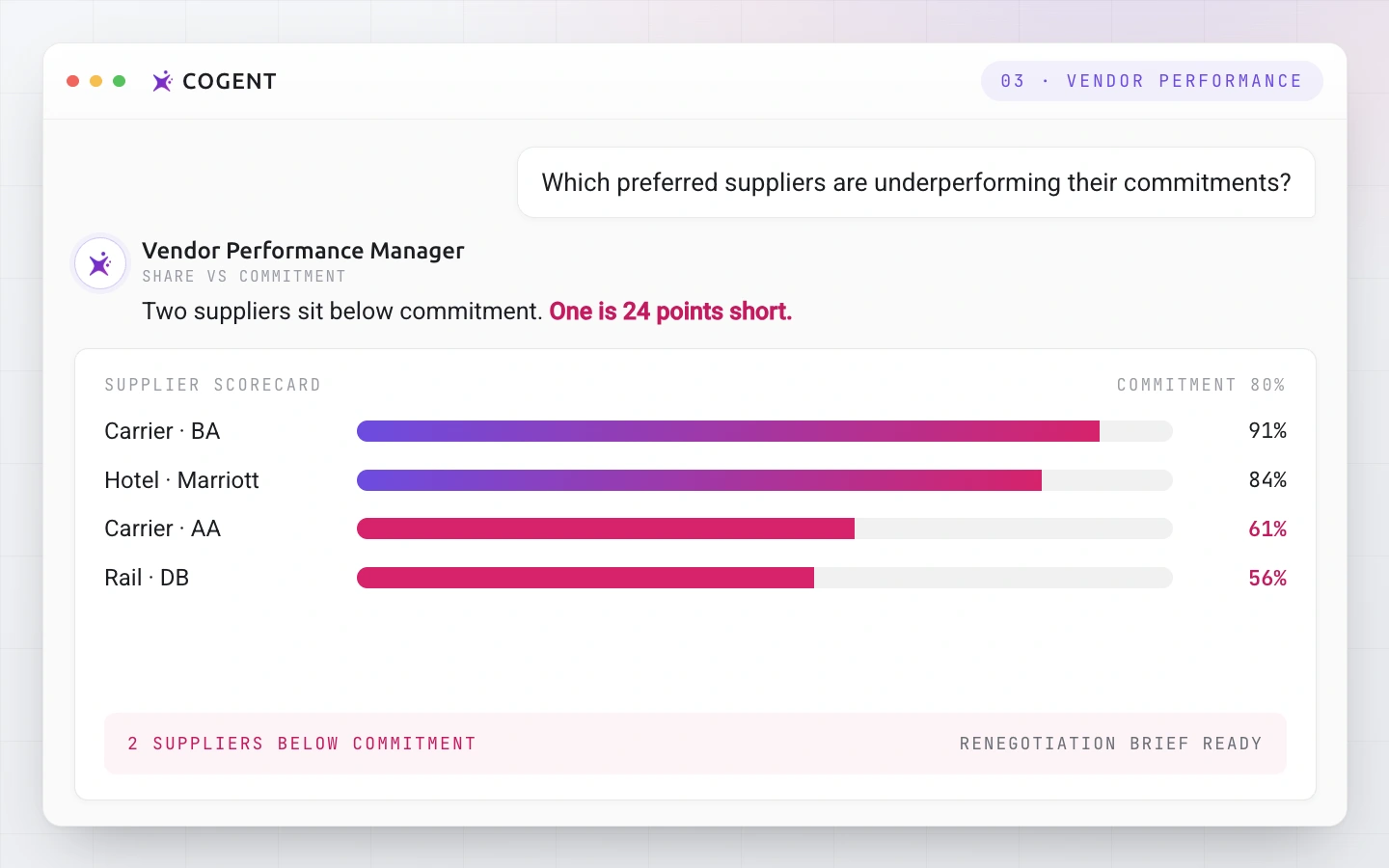
Every finding is scored against your business rules, policy parameters and negotiated rates rather than model confidence. An independent validation agent audits outputs before release, source authority resolves conflicts between records, and every figure traces to its source query. The framework targets a 99%+ acceptable response rate on relevant programme queries, and the full validation architecture is documented on the framework page.
Does Cogent replace our travel and expense management software?
No. Cogent is the intelligence layer across the systems you already run, including your existing travel expense management software. It consolidates TMC, card, expense, booking, HR and finance feeds through 200+ maintained connectors, inherits your permissions, and deploys in minutes rather than months. Booking and expense submission stay exactly where they are today; travellers never need to learn a new tool.
Is Cogent an AI data analyst?
Yes, in effect. Cogent takes a business question, plans the analysis, executes it across your live T&E data through specialist agents, validates the result against your business rules, and returns a cited answer. It is the same work a data analyst does, without the ticket queue or the wait.
Can Cogent detect expense fraud and T&E leakage?
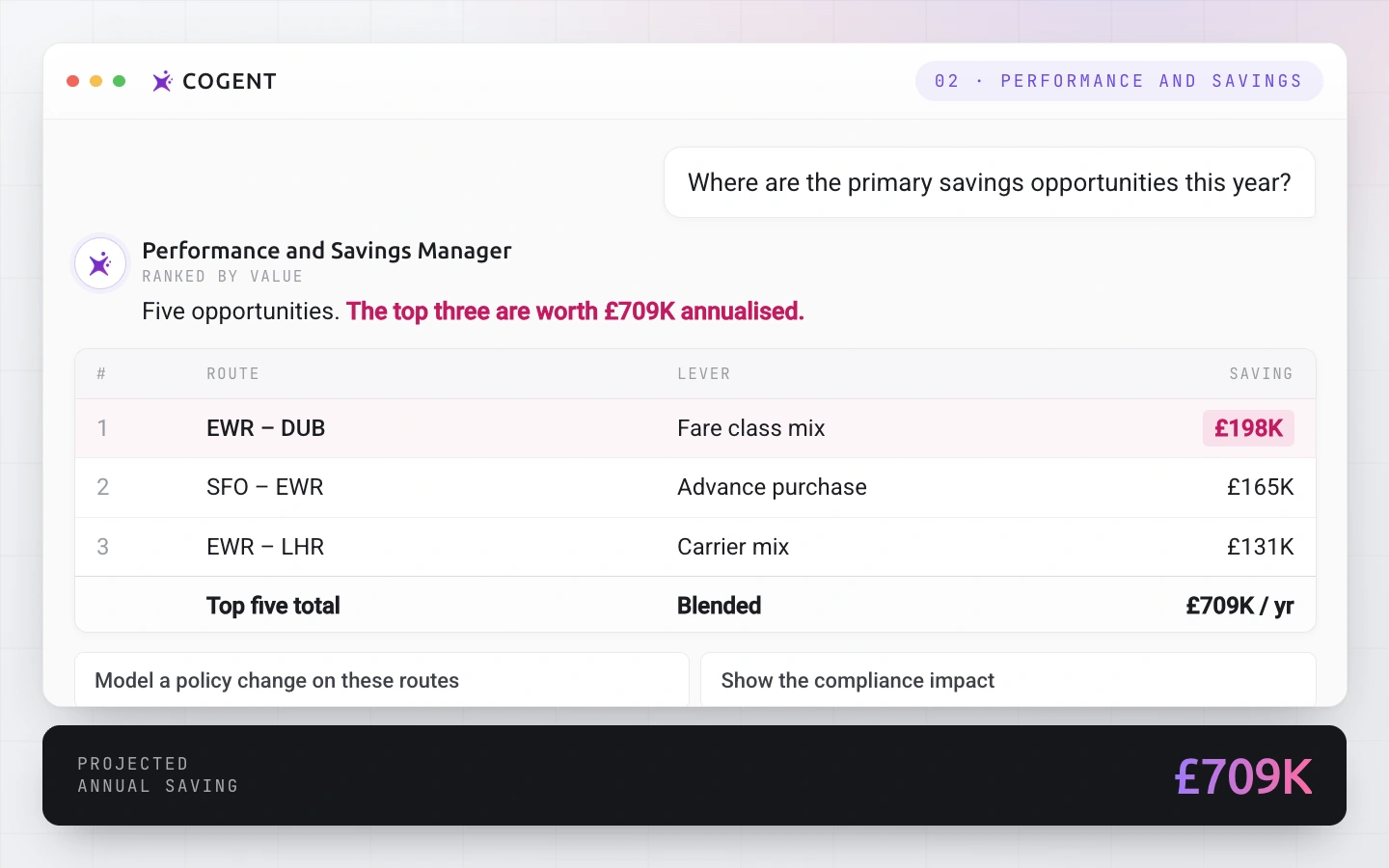
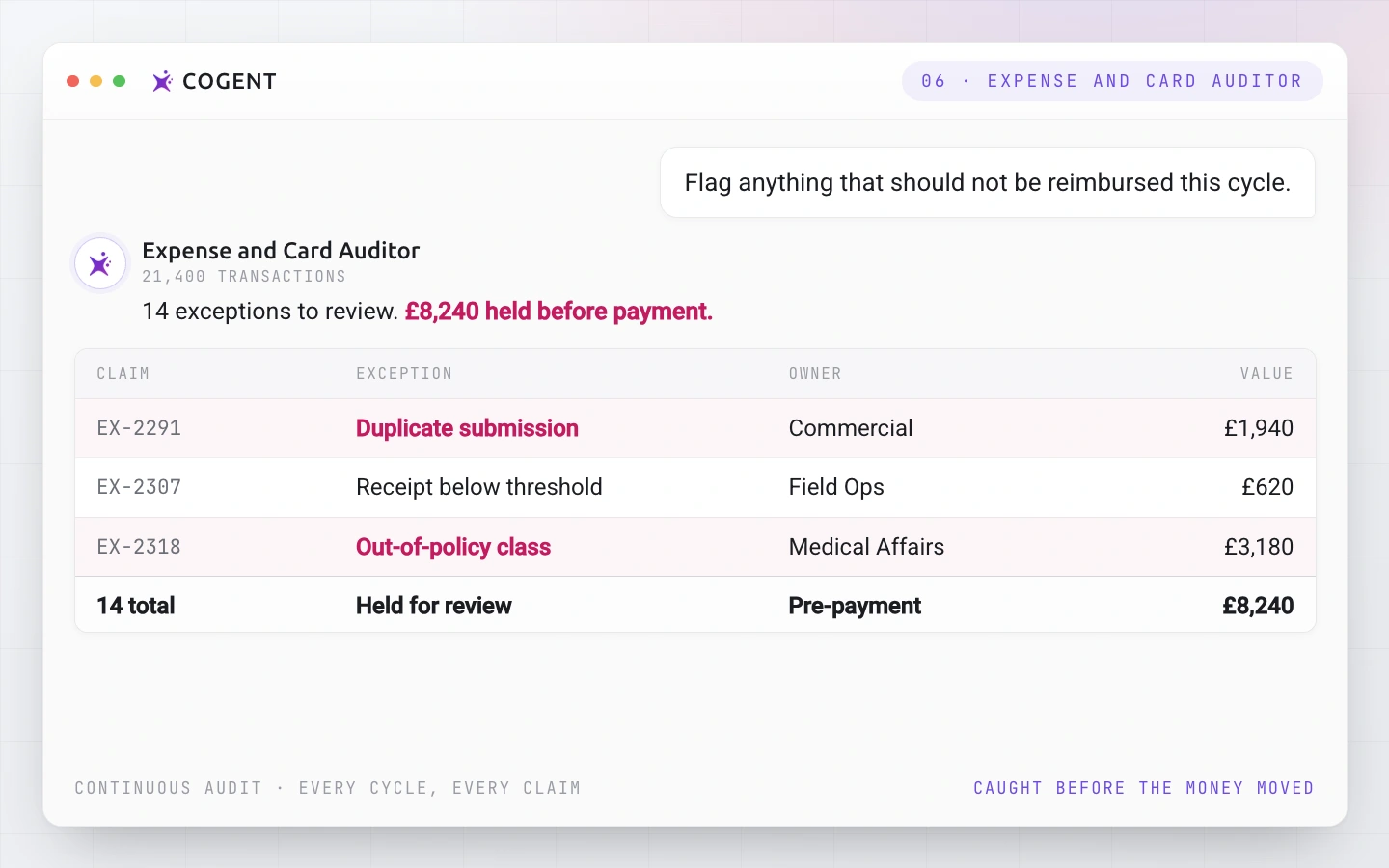
Yes. The Expense and Card Auditor and Performance and Savings Manager agents run continuous auditing and expense fraud detection pre-reimbursement, alongside DetectX, PredictX's continuous transaction-audit engine, flagging duplicate submissions, receipt anomalies and leakage before the money moves.
Does Cogent write SQL?
No. You brief Cogent in natural language: no query syntax, no keywords, no SQL to write. Its agents translate the brief into the queries your connected systems need and return the answer, cited to source.
What is reporting debt?
Reporting debt is the gap between the questions a travel programme needs answered and the answers its reporting can deliver in time to act. It builds whenever an answer takes days of analyst work instead of seconds, and it compounds: every delayed answer defers a decision. Cogent clears it by answering in seconds, cited, from live data.
Can Cogent handle ad hoc reporting?
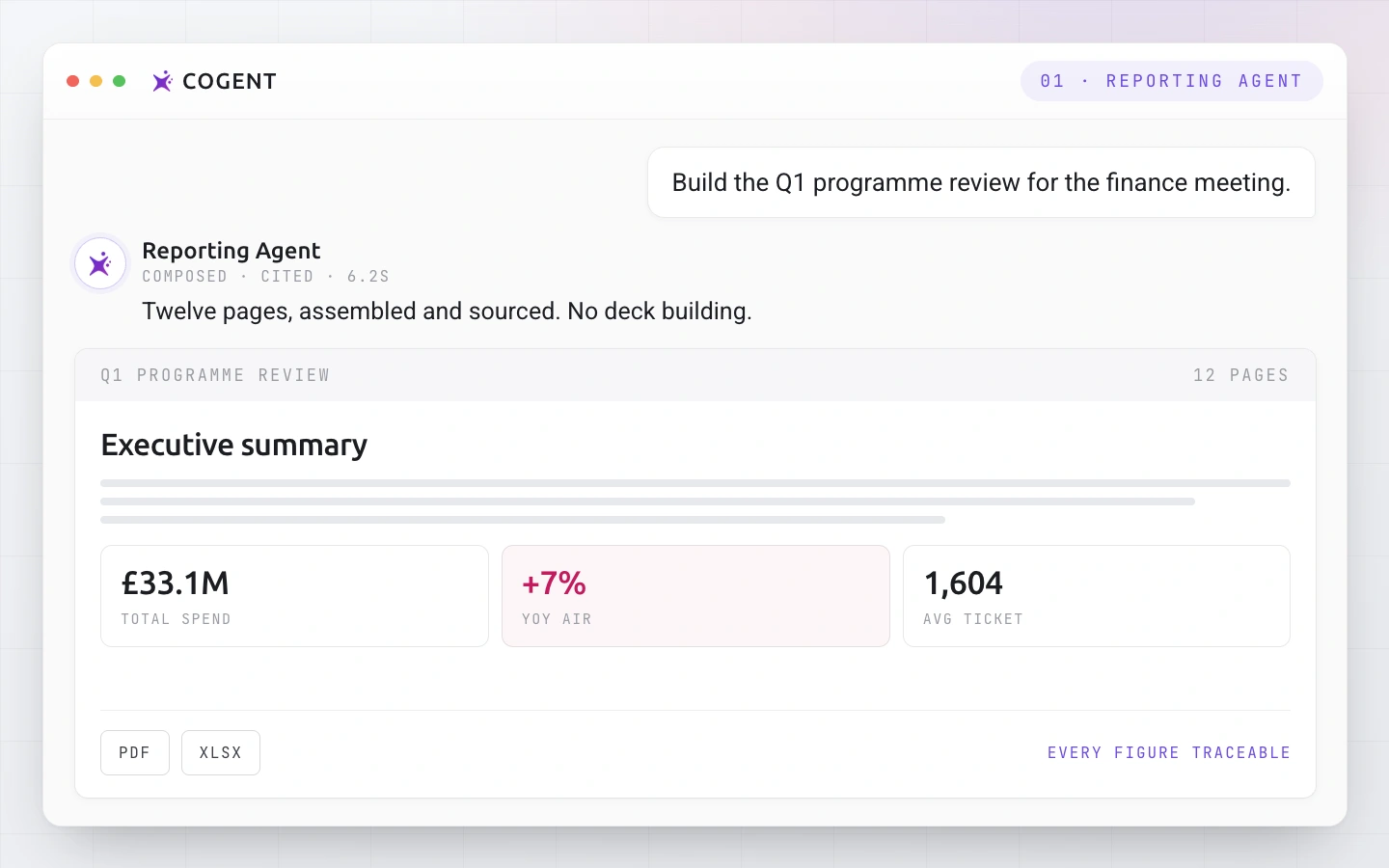
Yes, and it is most of what Cogent does. Ad hoc reporting is the question nobody modelled in advance, needed before the meeting, which normally becomes a ticket and a wait. Brief Cogent in plain language and its agents plan the analysis, run it across your consolidated travel and expense data and return a cited answer in seconds. No request queue, no new dashboard to build, and any thread re-runs on fresh data whenever the question comes back.


.png)