What is corporate travel carbon reporting?
Corporate travel carbon reporting is the process of measuring and disclosing greenhouse gas emissions from employee travel, including flights, hotels, rail, and ground transport, under Scope 3 Category 6 of the GHG Protocol.
Most organisations get the methodology right. The data feeding into it is what lets them down.
Ask a sustainability team why their travel emissions report failed a CSRD audit and you will rarely hear "we used the wrong formula." You will hear that hotel folio data was missing, that rail bookings came in from three different systems with inconsistent methodologies, or that cabin class was never captured at booking. According to the Global Business Travel Association's 2024 Sustainability Benchmark, the overall corporate sustainability maturity score across all industries stands at just 1.3 out of 5. The methodology is not failing. Your data is.
Three terms worth defining before going further:
In This Article
- Why does corporate travel carbon reporting keep falling short?
- What data inputs does accurate Scope 3 travel reporting actually require?
- Why do inconsistent methodologies across data sources undermine your report?
- How does audit-ready travel carbon reporting actually work?
- How does integrated T&E data produce audit-ready carbon reporting?
- Frequently asked questions
Why does corporate travel carbon reporting keep falling short?
Corporate travel carbon reporting falls short because most organisations apply a credible calculation methodology to incomplete, inconsistent input data, producing figures that look precise but cannot withstand third-party audit.
The scale of the underlying problem is significant. Global commercial aviation CO₂ spiked 30% in just six years, rising from 707 million tonnes in 2013 to 918 million tonnes in 2019, according to the ICCT. Commercial traffic is growing four times faster than fuel efficiency is improving. Aviation emissions are rising 70% faster than IPCC projections. These numbers make accurate Scope 3 travel reporting increasingly material, and the tolerance for approximation increasingly thin.
The corporate sustainability gap reflects this. The GBTA benchmark found that only 14% of companies have set a carbon budget for business travel, and just 7% have established internal carbon fees. Without reliable input data, companies cannot set credible targets, let alone track progress toward them. For organisations with ESG in T&E as a corporate sustainability goal, that gap is not just a reporting problem. It is a strategic one.
Key stats that define the scale of the challenge:
"Today's travel and sustainability managers need more than just numbers, they need insight they can trust." Keesup Choe, CEO, PredictX
What data inputs does accurate Scope 3 travel reporting actually require?
Accurate Scope 3 travel emissions calculations require at minimum six granular inputs per trip: mode, route, carrier, cabin class, distance, and energy source, most of which are absent from standard TMC feeds and expense systems. Without these, travel carbon footprint tracking cannot produce defensible figures regardless of which carbon reporting methodology is applied.
Take cabin class alone. Business class generates 1.5 to 4 times more CO₂e per passenger than economy. First class generates 1.5 to 5 times more, according to the Google Travel Impact Model. On wide-body aircraft, premium seats account for approximately 35% of total flight emissions despite occupying a small fraction of seats. A report that applies an economy-class emission factor across all bookings is structurally wrong from the start.
Grid energy source compounds the problem for rail and hotels. The EU average grid intensity sits between 213 and 244 g CO₂/kWh, but this varies dramatically by country and even by hour. Germany's grid hit 166 g CO₂/kWh at 1pm on 13 May 2024, more than twice as clean as its April monthly average. Seasonal swings of 100 to 140 gCO₂/kWh are common across European datasets. An emission calculation that uses a static annual average rather than temporal grid data is using the right formula on the wrong number.
The 6-Input Carbon Accuracy Framework
Six variables determine whether a corporate travel carbon report is credible or not. Miss any one of them and the output cannot be defended under audit.
- Mode: air, rail, car rental, taxi, or ride-share, each using different emission factors
- Route or distance: actual flight path or journey distance, not straight-line estimates
- Carrier or operator: emissions intensity varies significantly between airlines and rail operators
- Cabin or vehicle class: business class is up to 4x more carbon-intensive than economy
- Energy source: grid mix for rail and hotel stays varies by country, region, and time of day
- Occupancy or load factor: shared journeys spread emissions across more passengers
PredictX's GHG compliance and last-mile carbon footprint guide covers how each of these inputs translates into defensible GHG reporting across every trip category.
Why do inconsistent methodologies across data sources undermine your report?
Inconsistent methodologies across TMC platforms, expense systems, and rail operators mean that even when each data source is individually accurate, combining them produces a carbon figure that is internally incoherent and cannot pass assurance.
Corporate travel data flows through at least four separate systems: the TMC, the online booking tool, direct rail bookings, and the expense management platform. Each source applies its own emission factors, its own distance assumptions, and its own treatment of cabin class and grid intensity. As Business Travel News Europe reported in 2024, the diversity of emissions methodologies causes significant confusion even among sustainability professionals, with different approaches often producing considerably different assessments of the same travel programme.
The result is a transparency gap. A flight booked through the TMC may use DEFRA factors. A rail ticket purchased on a personal card and expensed may use spend-based estimates. A hotel stay may not be calculated at all. Stitching these together into a single Scope 3 disclosure produces a number that is neither auditable nor actionable.
How does audit-ready travel carbon reporting actually work?
Audit-ready corporate travel carbon reporting follows five sequential steps: collecting all booking and expense data, standardising inputs across sources, enriching with external datasets, applying a certified methodology, and generating traceable CO₂e outputs for every transaction.
Most organisations only do steps one and four. They pull whatever data they have and push it through a calculator. Steps two, three, and five are where audit-readiness is built or lost.
The 5-Step Process for Audit-Ready Travel Carbon Reporting
Step 1: Collect booking, expense, and card data Pull data from every source: TMC booking records, online booking tool exports, directly booked rail and hotel, expense reports, and corporate card feeds. No single source covers everything. Completeness starts here.
Step 2: Standardise and clean fragmented inputs Normalise inconsistent data across sources. Deduplicate trips. Align cabin class terminology. Resolve conflicting carrier codes. A calculation applied to dirty data produces a dirty number, regardless of how sophisticated the methodology is.
Step 3: Enrich with external datasets Layer in the variables that raw booking data does not contain: actual flight-path distance, aircraft type, carrier-specific fuel efficiency, regional grid carbon intensity, and temporal grid data for rail and hotels. This is where generic estimates become granular calculations and where carbon hotspots become visible: the specific routes, departments, or travel types driving the largest share of your total CO₂ footprint. Identifying them is the foundation of any credible CO₂ reduction strategy.
Step 4: Apply a certified methodology Run every enriched transaction through a single, version-controlled calculation engine aligned to GHG Protocol Category 6, ISO 14083, and CORSIA/EU ETS standards. Methodology consistency across all modes is what makes the output comparable, defensible, and useful for setting corporate travel policy based on real emissions data rather than estimates.
Step 5: Generate auditable CO₂e outputs with full traceability Produce trip-level CO₂e figures with an immutable audit trail showing the inputs, emission factors, and methodology version used for each calculation. This is what third-party assurers require under CSRD.
The Scope 3 Travel Data Maturity Model
Where does your organisation sit today?
How does integrated T&E data produce audit-ready carbon reporting?
Integrated Travel and Expense data produces audit-ready corporate travel carbon reporting by consolidating all travel data streams into a single certified calculation engine that applies one consistent methodology across every mode, every carrier, and every booking channel.
The shift from approximation to precision is not about switching from one carbon calculator to another. It is about fixing the data architecture underneath the calculation. Source data must be consolidated, cleansed, enriched with granular inputs, and then passed through a certified methodology that can be version-controlled and reproduced for third-party assurance.
Here is what that difference looks like in practice:
PredictX, in partnership with SQUAKE, addresses this at the data layer first. SQUAKE is a climate-tech platform purpose-built for aviation, rail, road, and lodging. The integration pulls consolidated Travel and Expense data from booking and expense systems, transfers the fields required for emissions calculations, runs each transaction through the selected certified methodology, and saves the result with a full audit trail. The result is a single sustainability dashboard giving travel managers, finance teams, and ESG leads the travel data and analytics they need for accurate ESG performance management and credible net-zero reporting. Every booking, every mode, one certified methodology.
For a full view of how the integration works, PredictX's audit-ready CO₂ reporting solution overview sets out the architecture. The audit-ready ESG compliance product sheet covers the data inputs, calculation standards, and compliance outputs. The Scope 3 carbon reporting chain of custody guide explains how each data point is traced from source to disclosure. For organisations building their CSRD submission, the CSRD Scope 3 compliance resource for corporate travel covers the full regulatory requirements.
"Together, we're raising the bar for what enterprise clients can expect from sustainability tools, transforming data into meaningful action." Philipp von Lamezan, CEO and Co-founder, SQUAKE
Frequently asked questions
What is corporate travel carbon reporting and why does it matter?
Corporate travel carbon reporting is the process of measuring and disclosing greenhouse gas emissions from employee travel under Scope 3 Category 6 of the GHG Protocol. It matters because CSRD requires large companies to report these emissions with third-party assurance from 2025, and because business travel is one of the few Scope 3 categories where accurate, granular data is genuinely achievable with the right platform.
Why is spend-based carbon reporting insufficient for corporate travel?
Spend-based corporate travel carbon reporting is insufficient because it applies average emission factors to financial spend, collapsing real differences in cabin class, carrier, route, and energy source into a single imprecise number. Carbon accounting practitioners report that spend-based hotel and ground transport data carries a 30 to 40% accuracy variance, too wide for credible CSRD disclosure or science-based target setting.
What is ISO 14083 and why does it matter for travel emissions reporting?
ISO 14083 is the international standard for calculating greenhouse gas emissions from transport chains, and it is the methodology framework third-party assurers use to validate corporate travel carbon reports. It requires granular inputs including actual route, carrier, vehicle class, and energy source. Reports built on generic spend-based estimates cannot satisfy ISO 14083 requirements.
How does cabin class affect corporate travel carbon reporting accuracy?
Cabin class has a disproportionate effect on Scope 3 travel emissions calculations: business class generates 1.5 to 4 times more CO₂e per passenger than economy, and first class 1.5 to 5 times more. On wide-body aircraft, premium seats account for roughly 35% of total flight emissions. A report that does not capture cabin class at booking level is systematically undercounting for organisations with frequent premium travel.
What is the difference between activity-based and spend-based Scope 3 travel calculations?
Activity-based Scope 3 travel calculations use physical data, including distance, carrier, cabin class, fuel type, and grid energy mix, to produce accurate per-booking emission figures, while spend-based methods use financial expenditure and average factors that cannot distinguish between a business class long-haul and an economy short-haul. The GHG Protocol recommends activity-based methods as the primary approach, with spend-based used only as a fallback where physical data is unavailable.
What is ESG in business travel and why does it matter for carbon reporting?
ESG in business travel refers to the environmental, social, and governance practices that organisations apply to their corporate travel programmes, with the environmental dimension requiring measurement and reduction of the travel carbon footprint across all modes. For carbon reporting purposes, this means calculating Scope 3 emissions accurately across flights, hotels, rail, and ground transport, and reporting against auditable sustainability goals. Without consolidated Travel and Expense data, ESG in T&E remains an ambition rather than a measurable outcome.
How does temporal grid analysis improve rail emissions accuracy?
Temporal grid analysis improves rail emissions accuracy by applying the actual carbon intensity of the electricity grid at the time of travel rather than a static annual average. Grid intensity can swing by 100 to 140 gCO₂/kWh between seasons. Using an annual average for a journey taken during peak solar output will overstate emissions significantly, making temporal data essential for a defensible corporate travel carbon report.
Key takeaway
Corporate travel carbon reporting requires six inputs: mode, route, carrier, cabin class, energy source, and load factor. Reports missing any of these inputs cannot meet CSRD audit standards.
Download the whitepaper: The Precision Imperative
If you are responsible for corporate travel carbon reporting and your current approach relies on TMC data alone, your Scope 3 figures have a data quality problem underneath them.
The PredictX and SQUAKE whitepaper, How to Quantify CO₂e Savings by Shifting Travel from Air to Rail, Part 2: The Precision Imperative, sets out exactly how to fix it. Inside you will find:
- The full data precision framework behind audit-ready CO₂e calculations
- How the PredictX and SQUAKE integration architecture closes every data gap across flights, hotels, rail, and ground transport
- The enhanced Air vs Rail Dashboard and how it produces route-specific, defensible modal shift evidence
- What CSRD and ISO 14083 auditors actually look for in a Scope 3 travel submission
Download the whitepaper here and move from approximation to audit-ready precision.
Related Posts
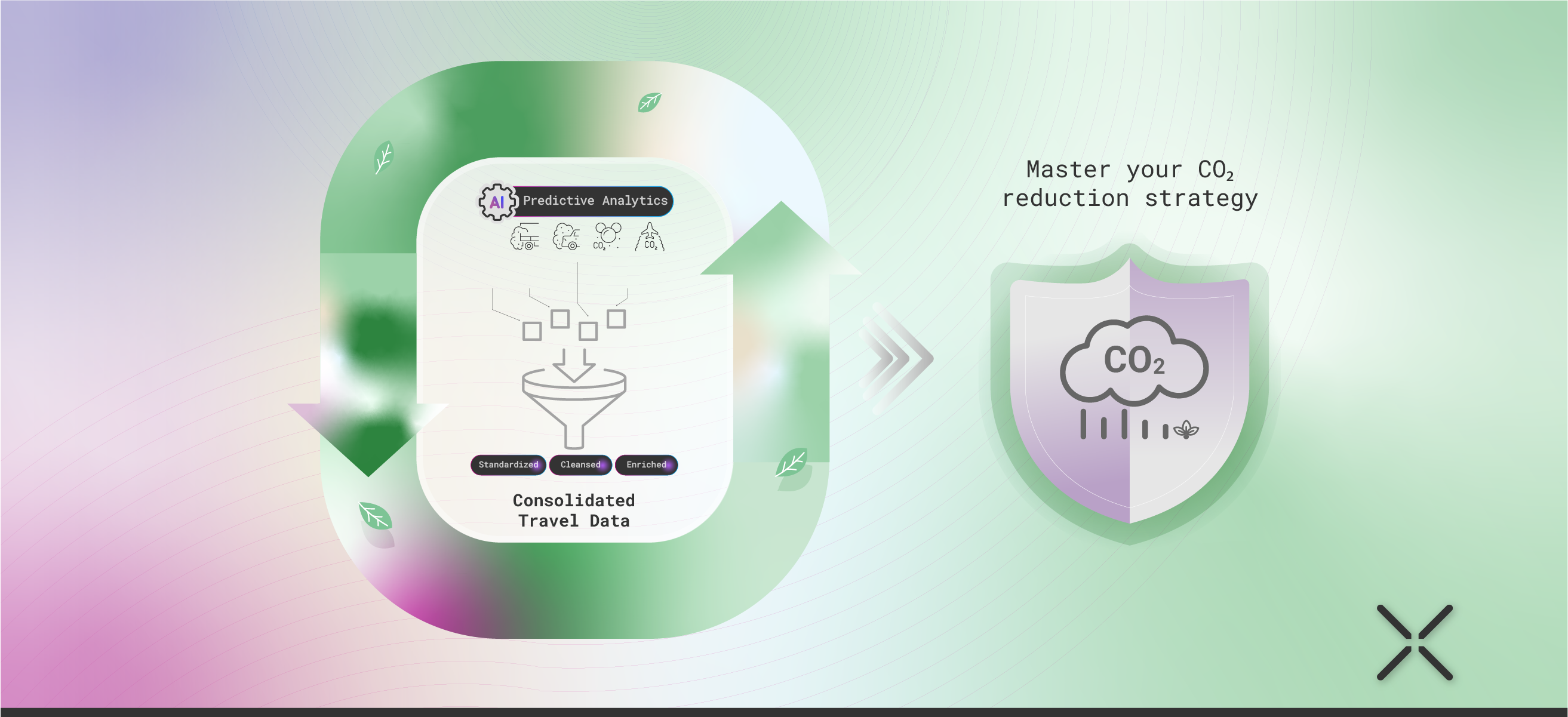
The What-If Machine: Using Travel Data & Predictive Analytics to Model Your Path to Net-Zero Targets
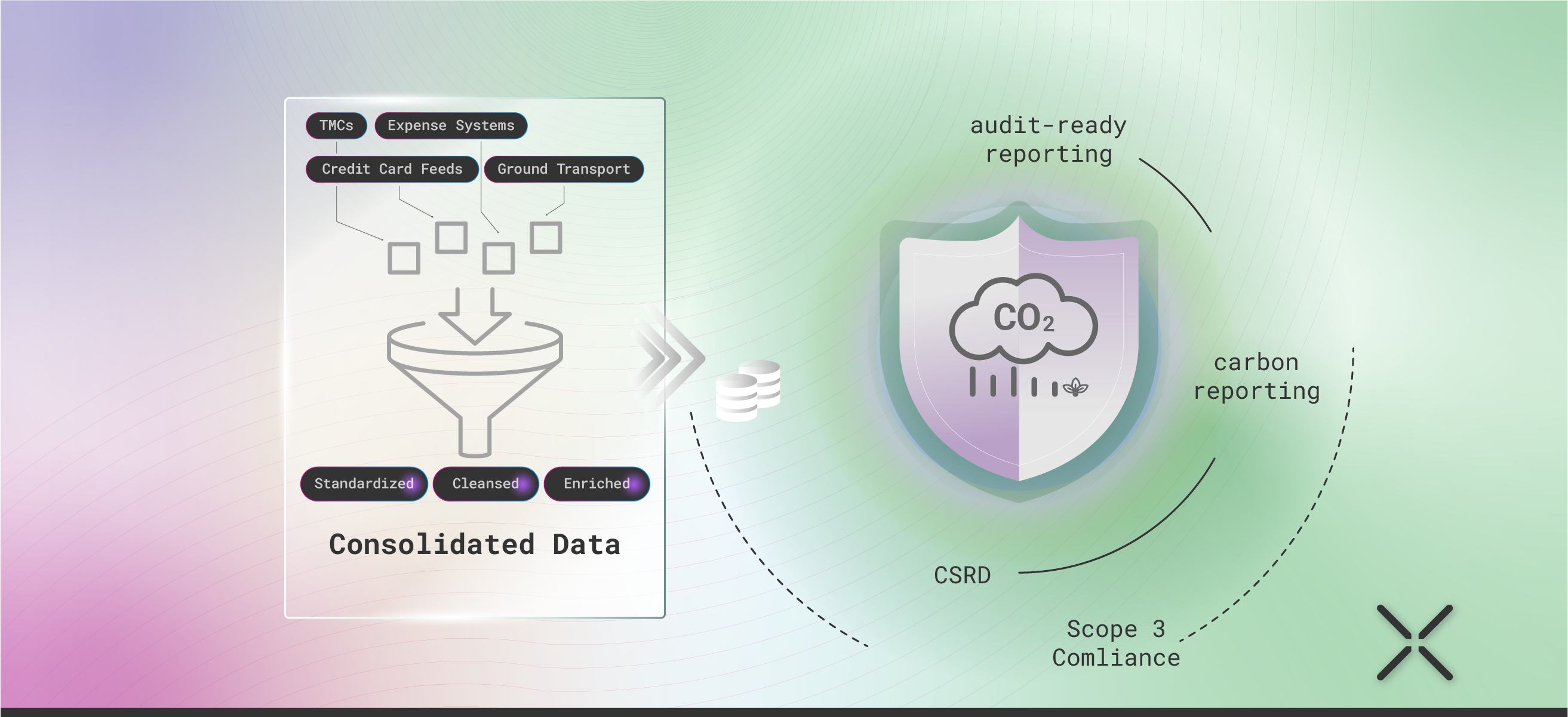
The Data Chain of Custody: Why Audit-Ready Reporting Begins with Consolidated T&E Data
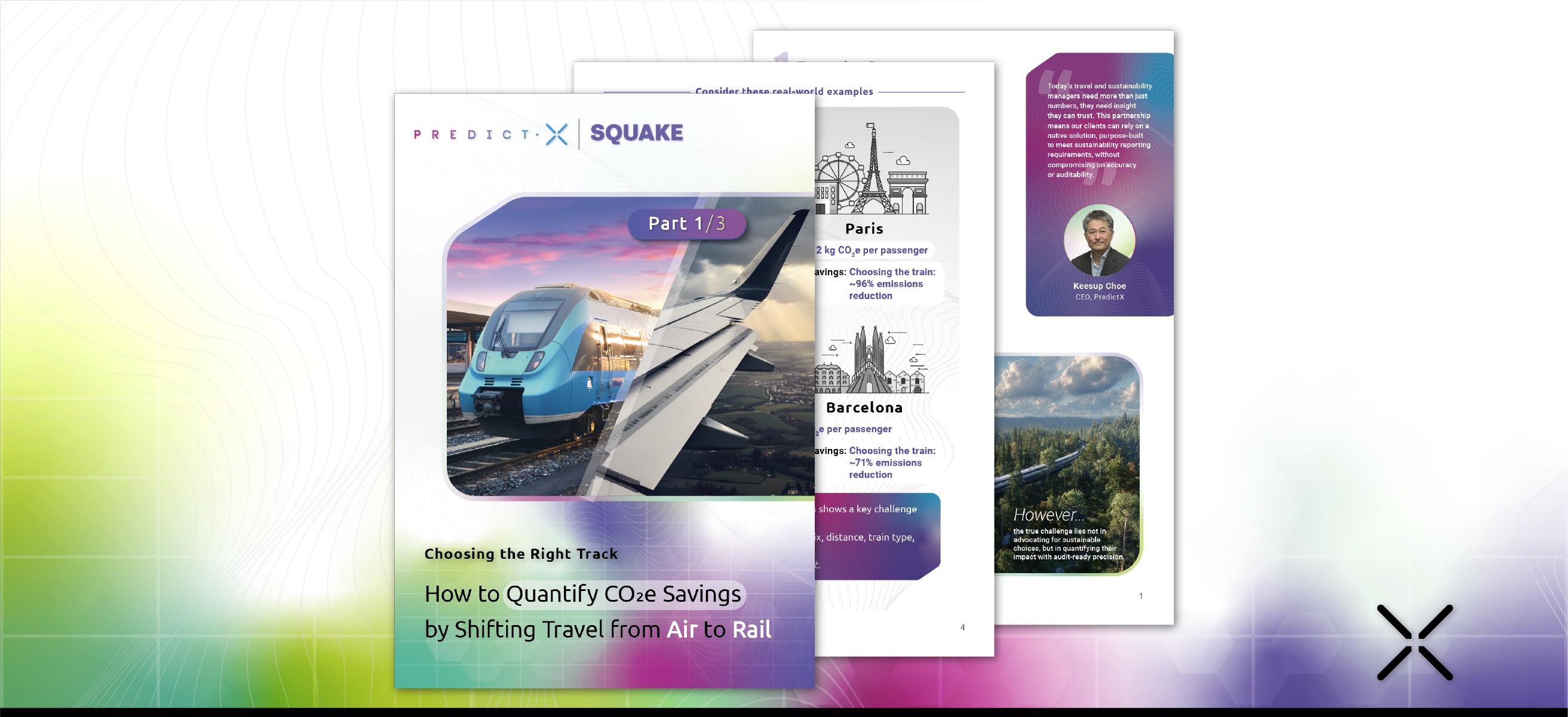
PredictX x SQUAKE: Quantifying CO₂e Savings from Air-to-Rail Modal Shift for Audit-Ready CSRD and Scope 3

PredictX and SQUAKE Make ESG Sustainability Goals Measurable and Audit-Ready for Corporate Travel Management
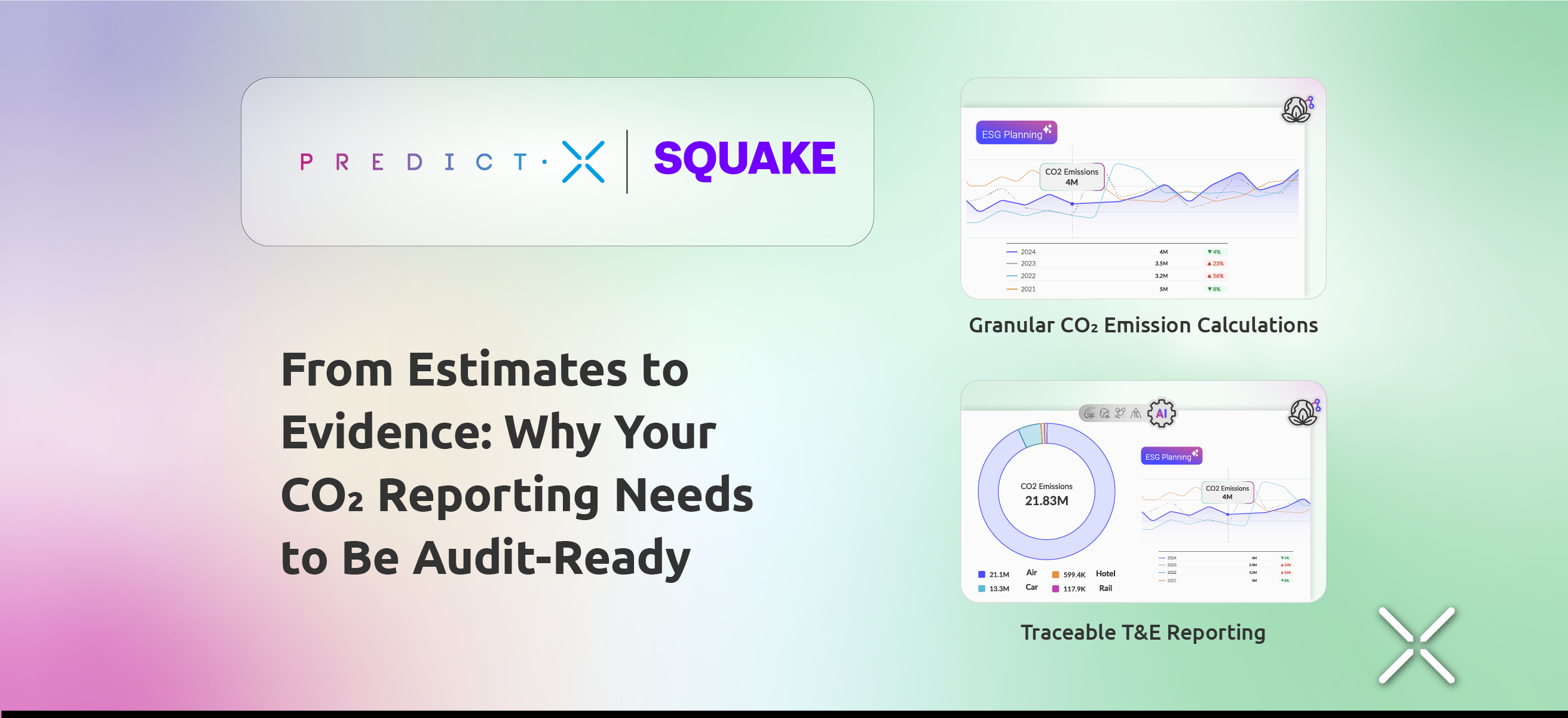
From Estimates to Evidence: PredictX x SQUAKE for Audit-Ready CO₂ Reporting
.webp)
The 2025 Playbook for Net-Zero Business Travel by PredictX & SQUAKE: Your 4-Step Guide to Actionable Sustainability
.png)
How To Promote Sustainability and Calculate Your Company's Carbon Footprint
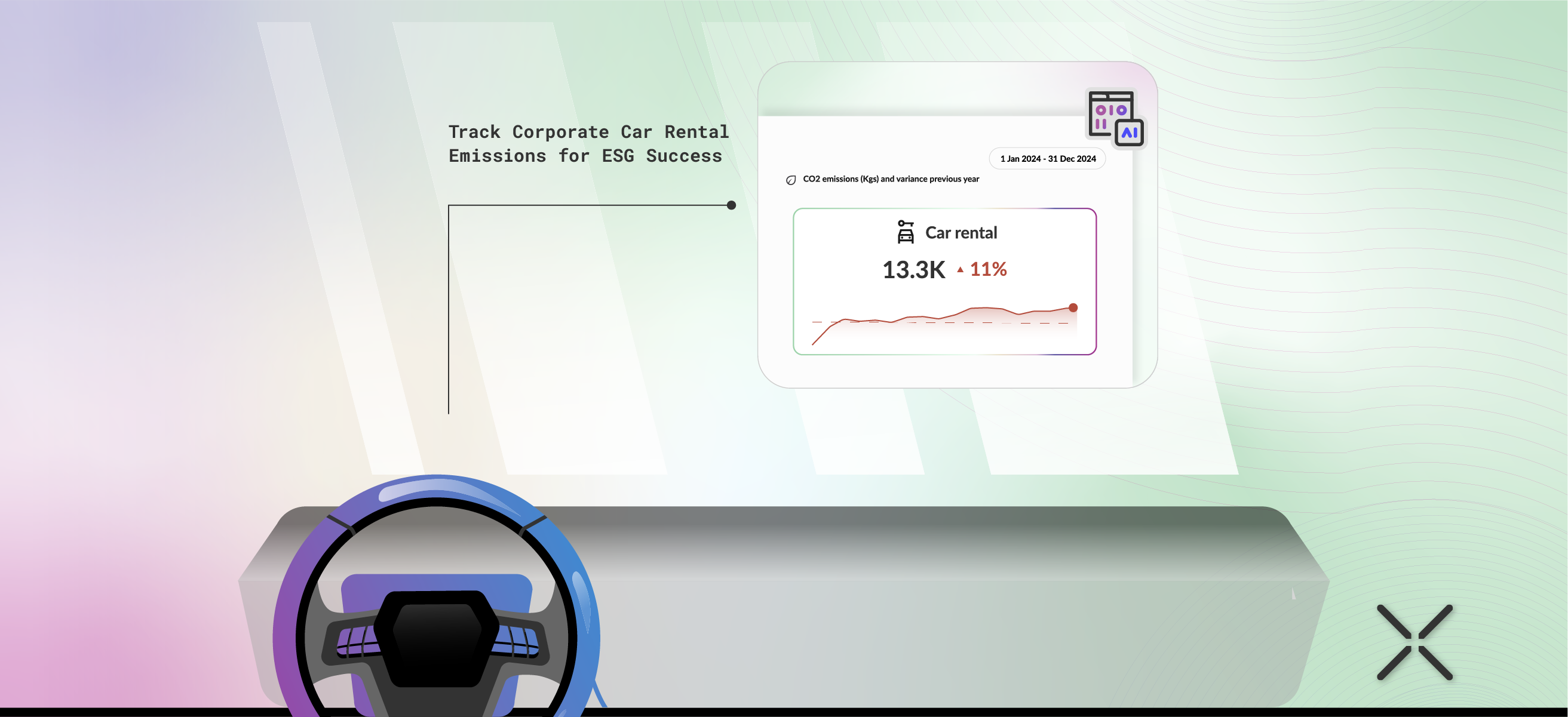
Putting Your Car Rental Emissions in the Driving Seat: A Smarter Approach to Sustainability
.png)
Adhering to the CSRD: Shaping the Future of Corporate Travel Sustainability with PredictX
%20(23).png)
PredictX for Sustainability
%20(1).png)
How PredictX is Pioneering the Use of AI for Corporate Travel Sustainability

Unveiling PredictX’s Internal Carbon Pricing Tool: A Transformative Leap for Business Travel Sustainability
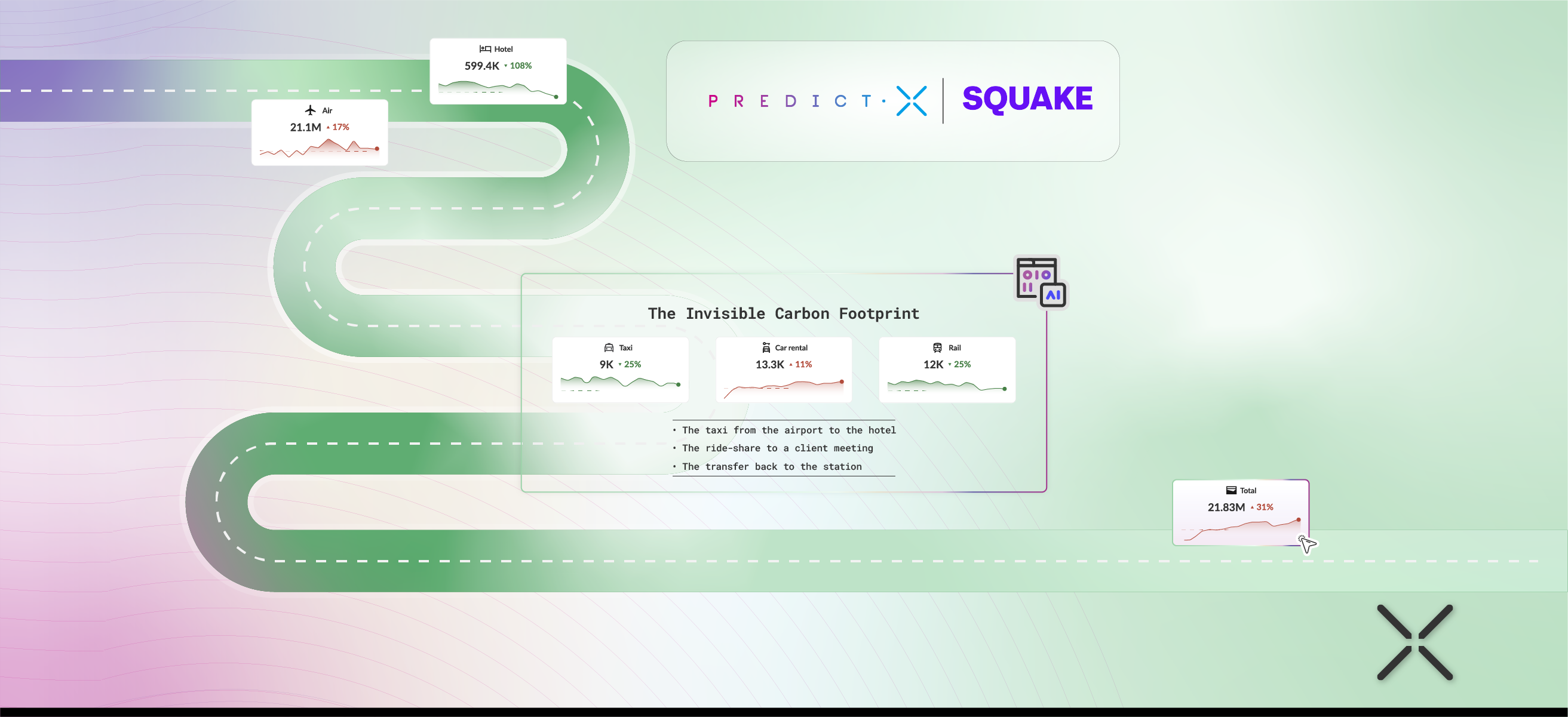
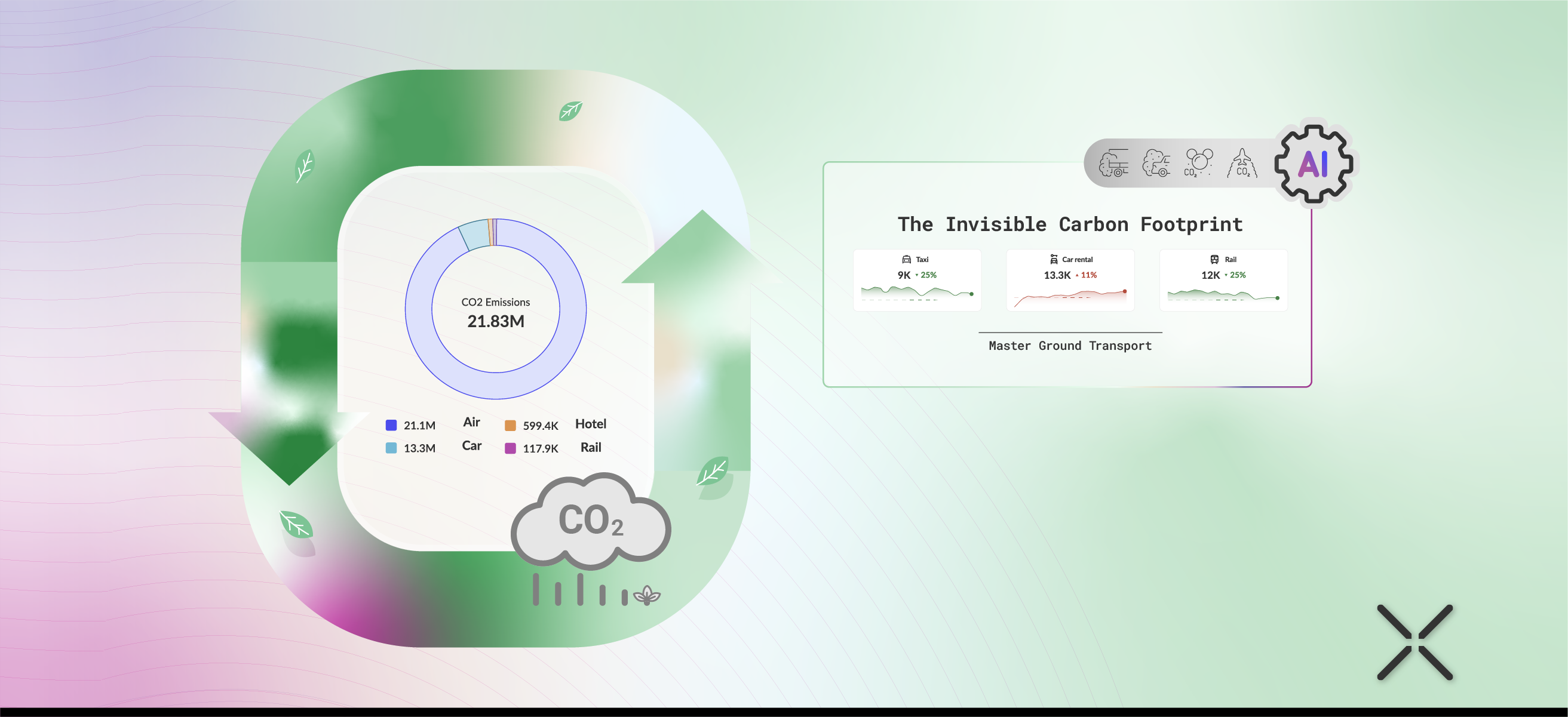
The Invisible Carbon Footprint: Why Your ESG Reporting Is Incomplete
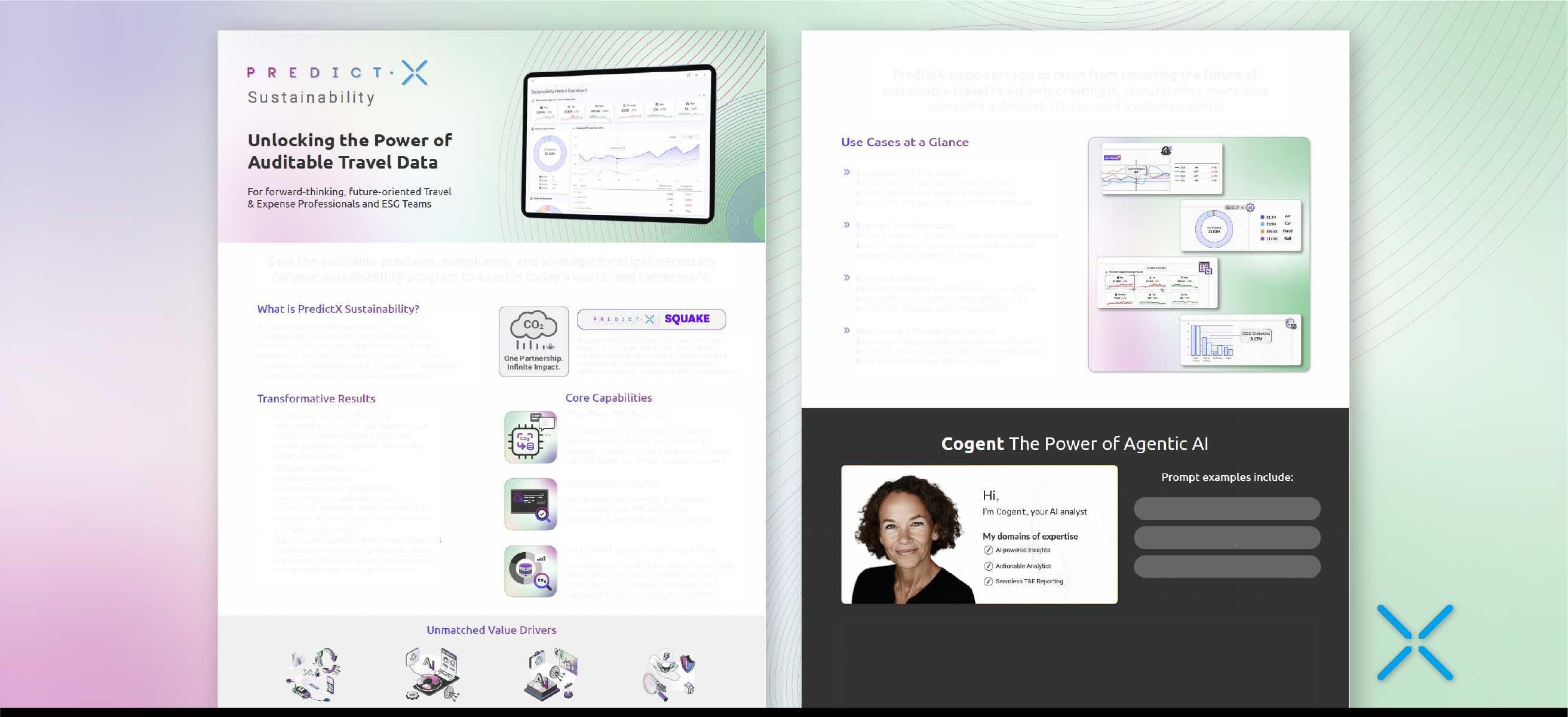
Failing Audits? Get the PredictX Product Sheet: The Path to Auditable Corporate Travel Emissions

The Scope 3 Mandate: Why CSRD Reporting Turns Business Travel Emissions into a Boardroom Issue